Real estate trends can vary significantly depending on where you are in Ottawa. While the overall market tells one story, individual communities often experience very different levels of sales activity, price movement, and buyer demand.
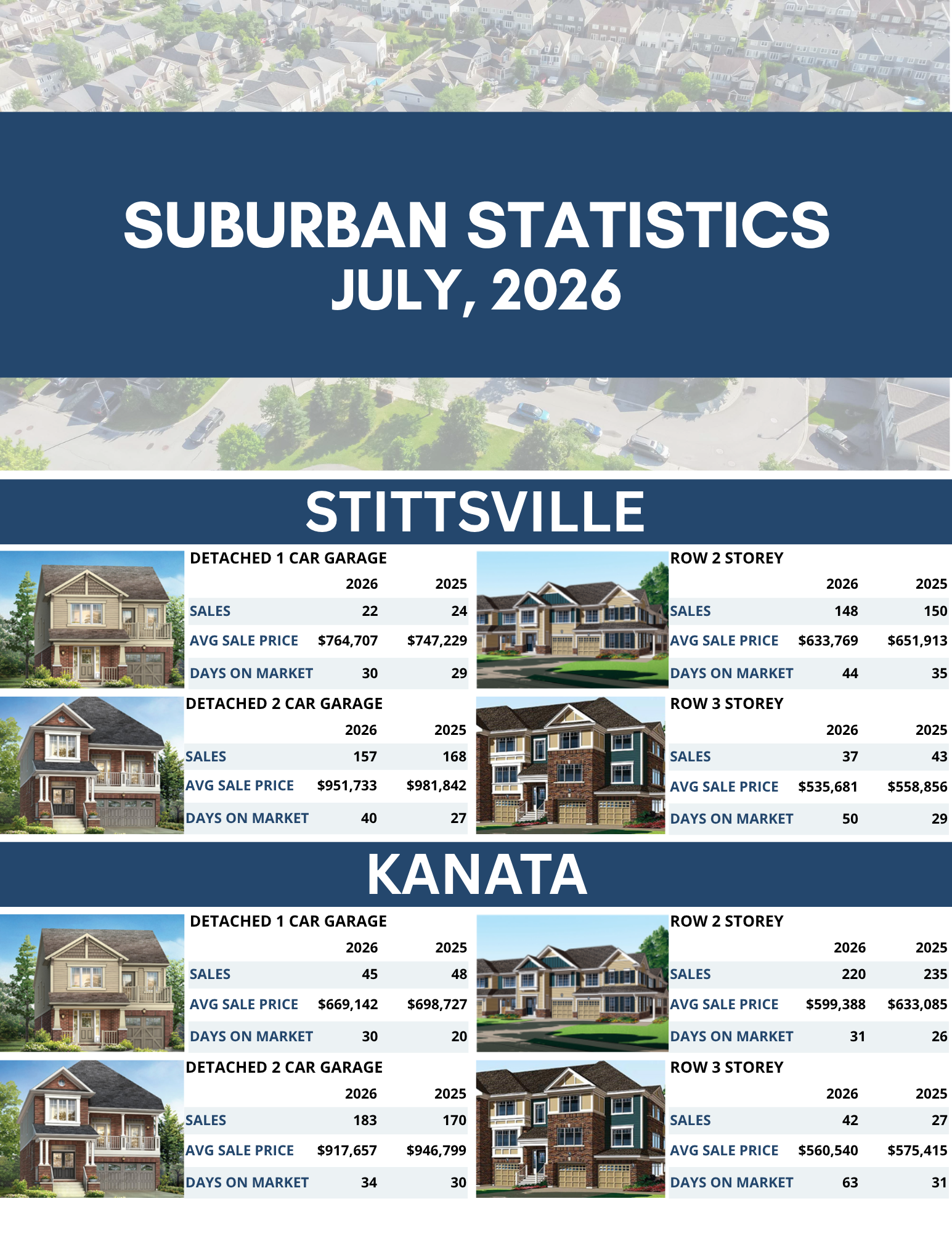
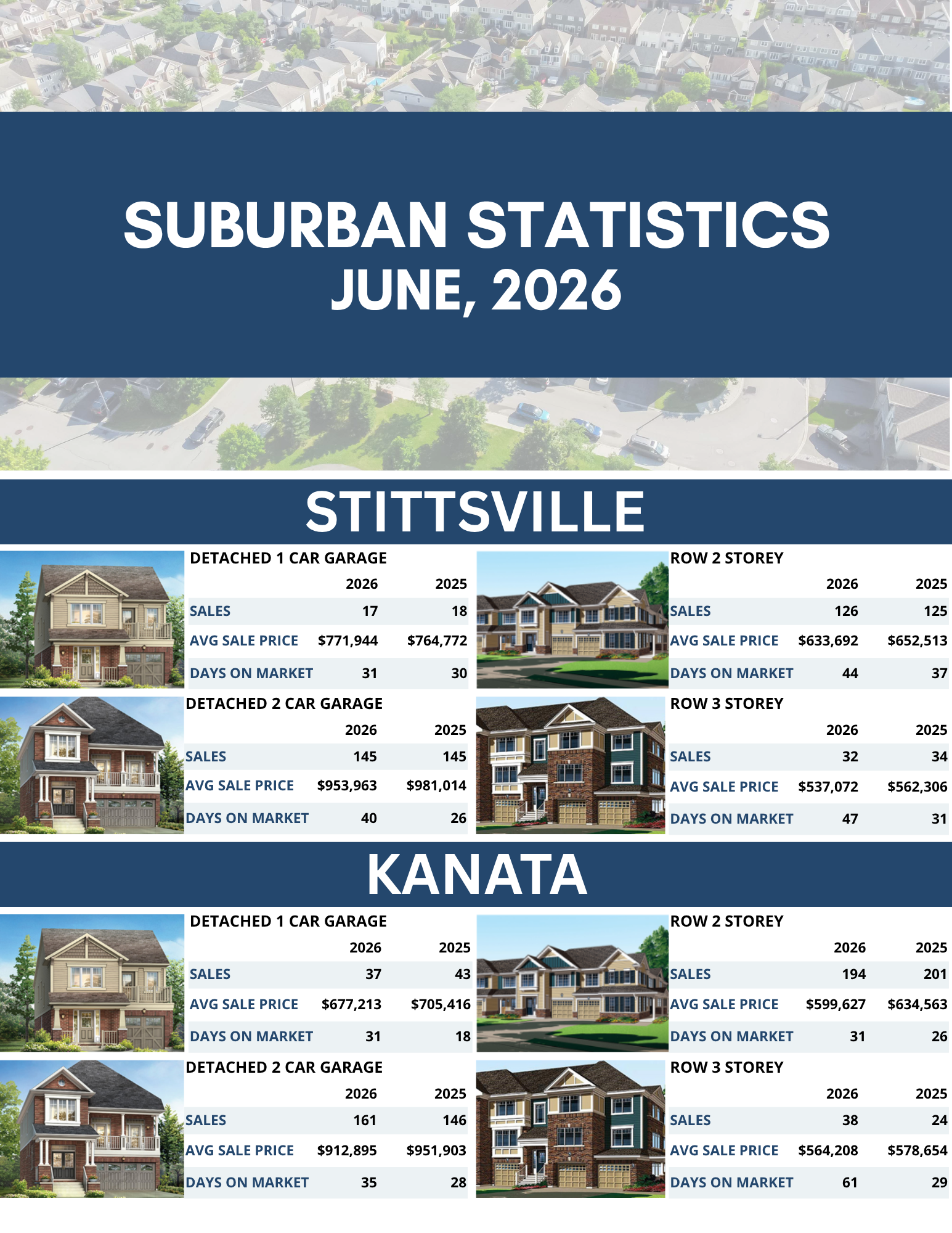
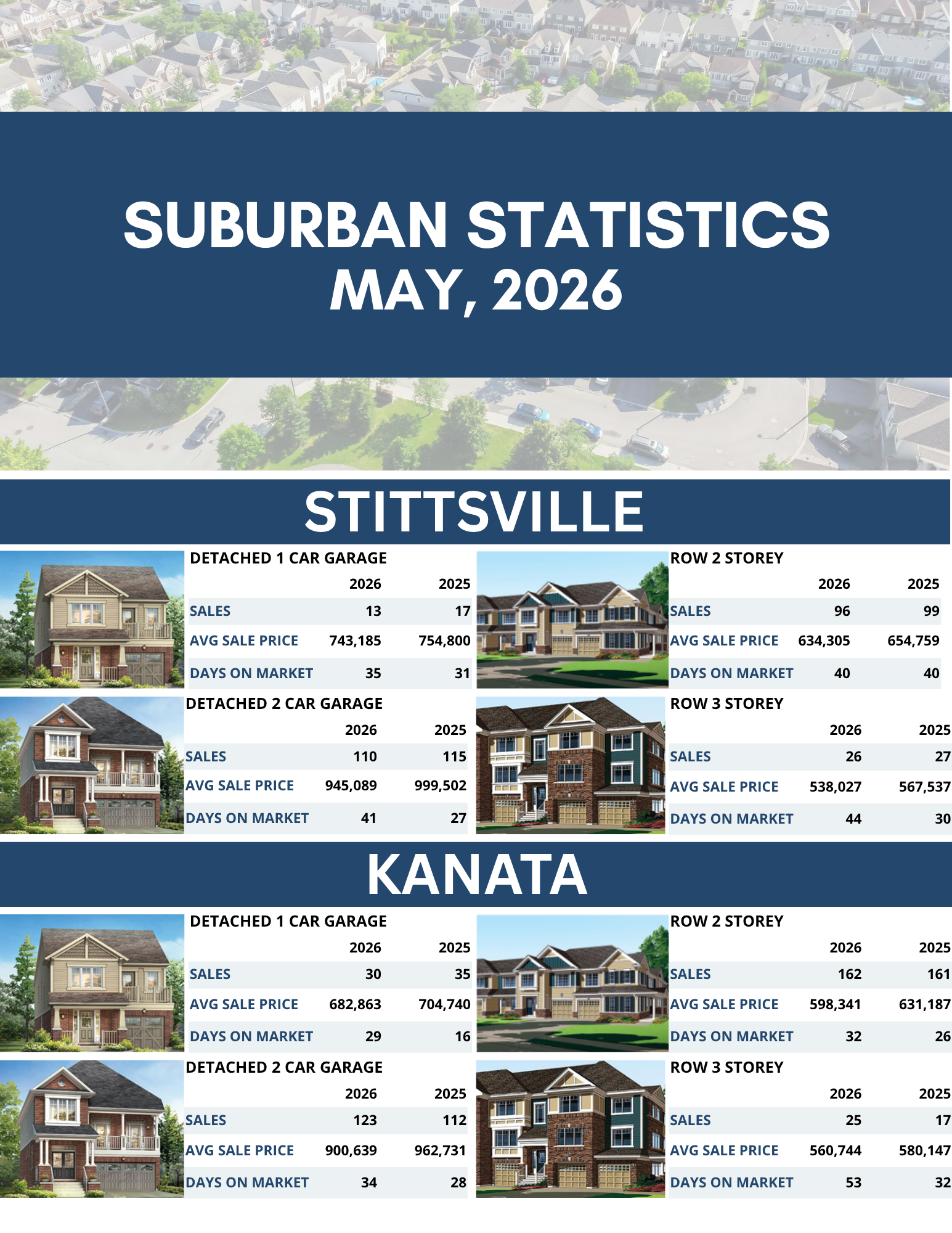
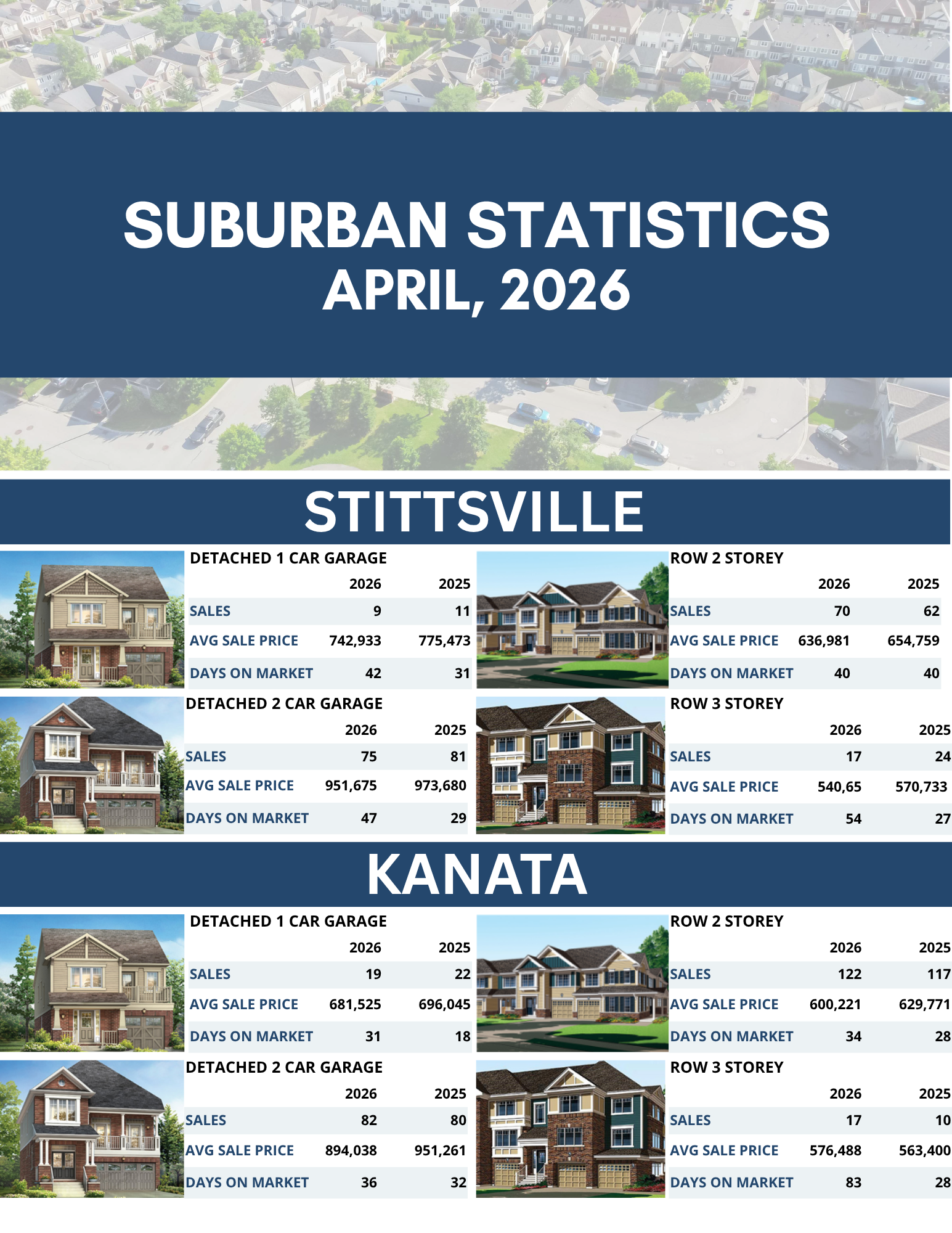
In this edition of our Suburban Statistics Series, we’re looking at five of Ottawa’s major suburban markets to see how each has performed so far in 2026. Using MLS® sales reported through OREB, we’ve compared activity from January 1 to July 1, 2026, against the same period last year to get a clearer picture of what’s changing across the city.
Ottawa’s real estate market is anything but uniform. In this edition of our Suburban Statistics Series, we’re examining how the city’s five largest suburban neighbourhoods are performing and where trends are emerging. The data below compares OREB MLS sales from January 1 through July 1, 2026, to the same period in 2025. It also captures the strongest year-over-year jump in sales activity we’ve seen in 2026.
The Ottawa housing market continued its slow but steady spring climb in May. Sales improved compared to April, buyers were more active, and homes that were priced properly continued to attract attention. However, we’re still seeing a very different market than we experienced during the spring rushes of the past few years.
If I had to summarize May in one sentence:
The market is healthy, but buyers are playing it safe and are taking their time.
Sales Picked Up, But Remain Behind Last Year
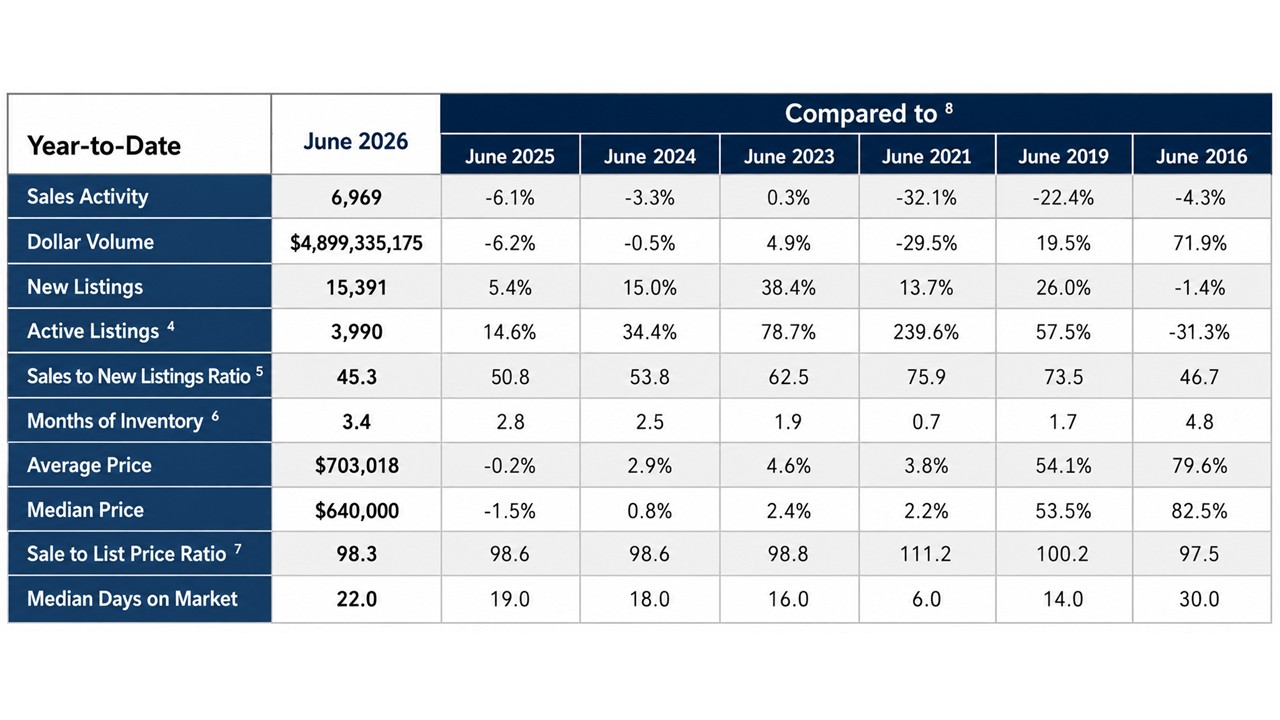
A total of 1,616 homes sold in Ottawa during May, up from 1,336 in April. That’s the seasonal increase we typically expect as the weather improves and more buyers begin shopping. However, sales were still down 10.6% compared to May of last year.
This isn’t because buyers have disappeared.
We’re still seeing plenty of showings, offers, and successful sales. The difference is that buyers have become more selective. They’re comparing more homes, negotiating harder, and are less willing to overlook pricing mistakes.
For sellers, this means preparation and pricing matter more than ever.
Inventory Continues to Grow
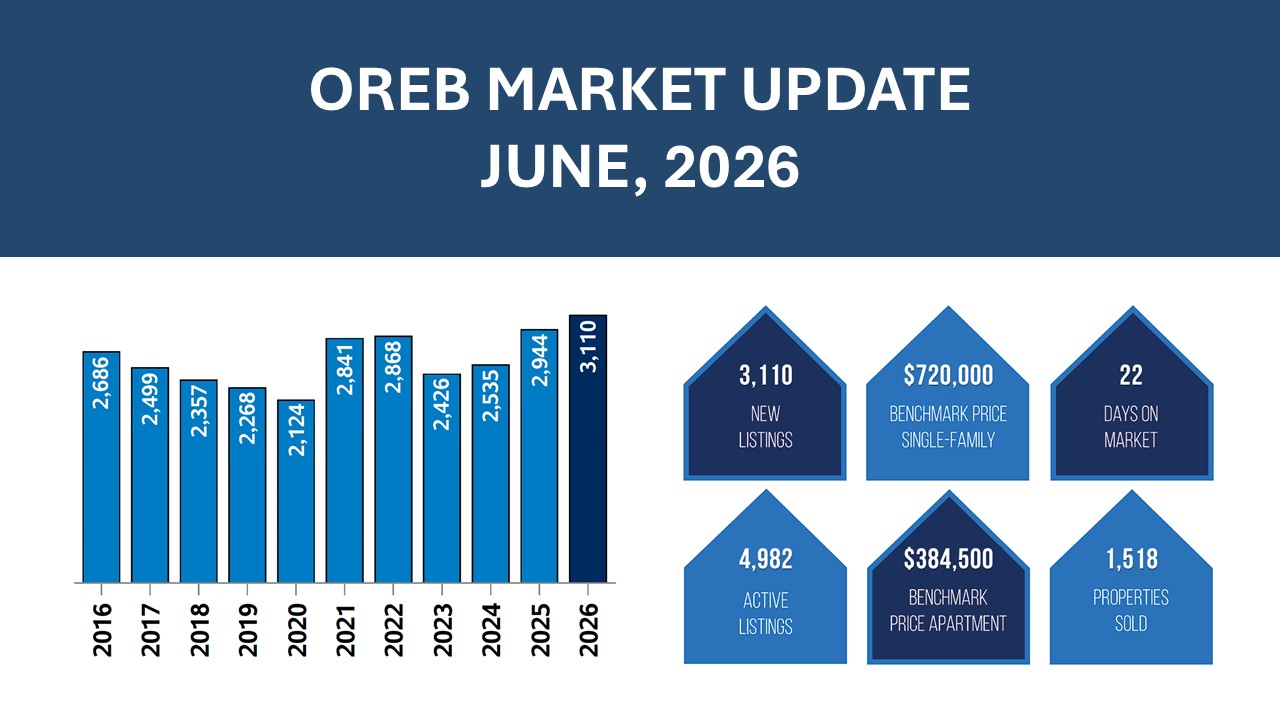
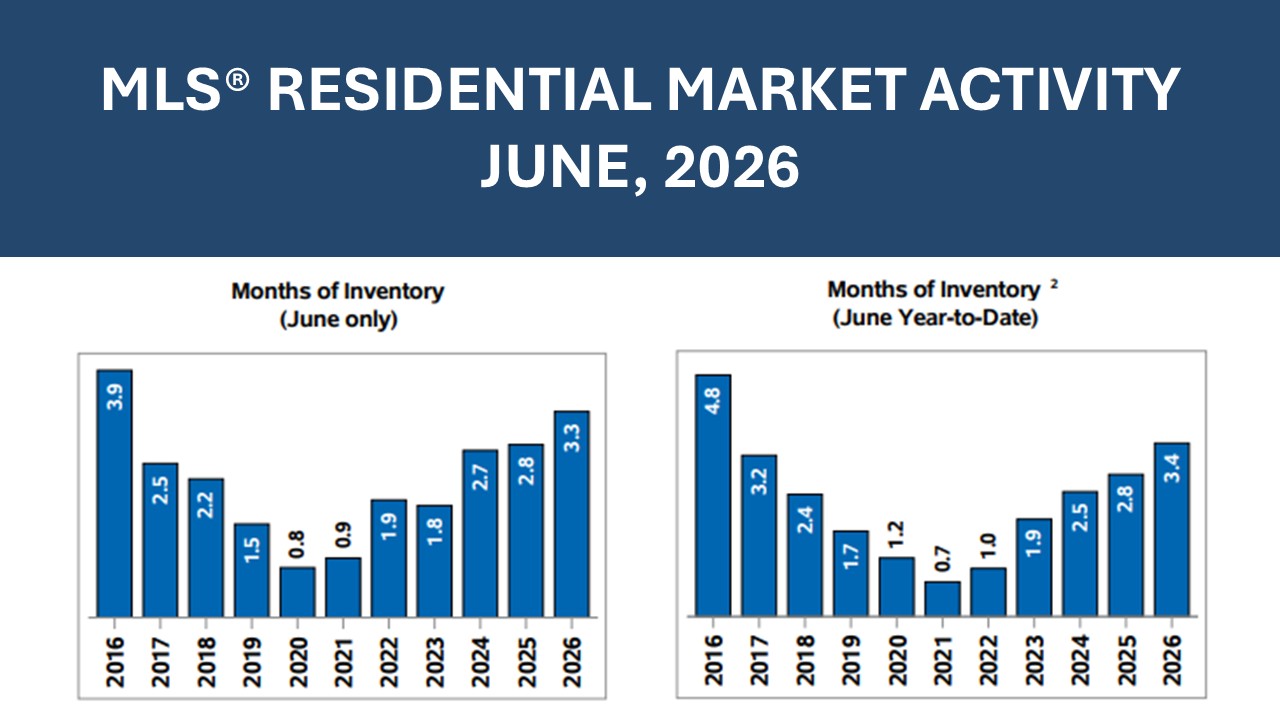
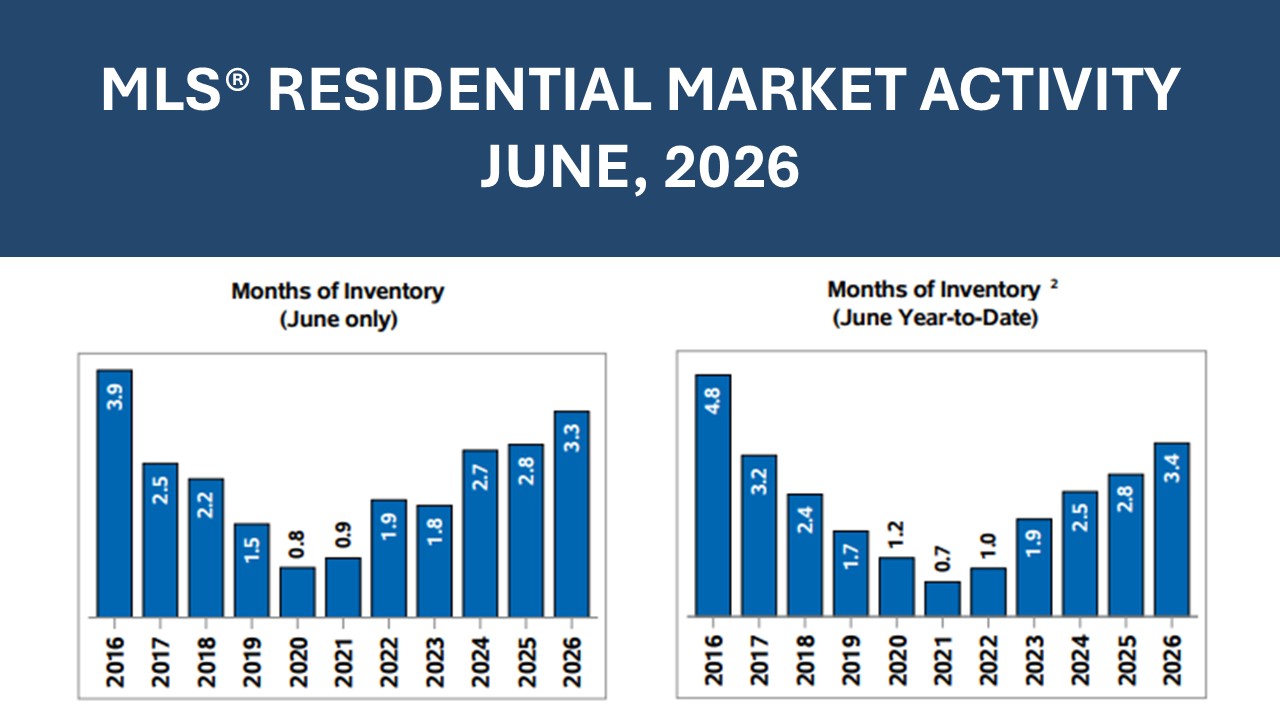
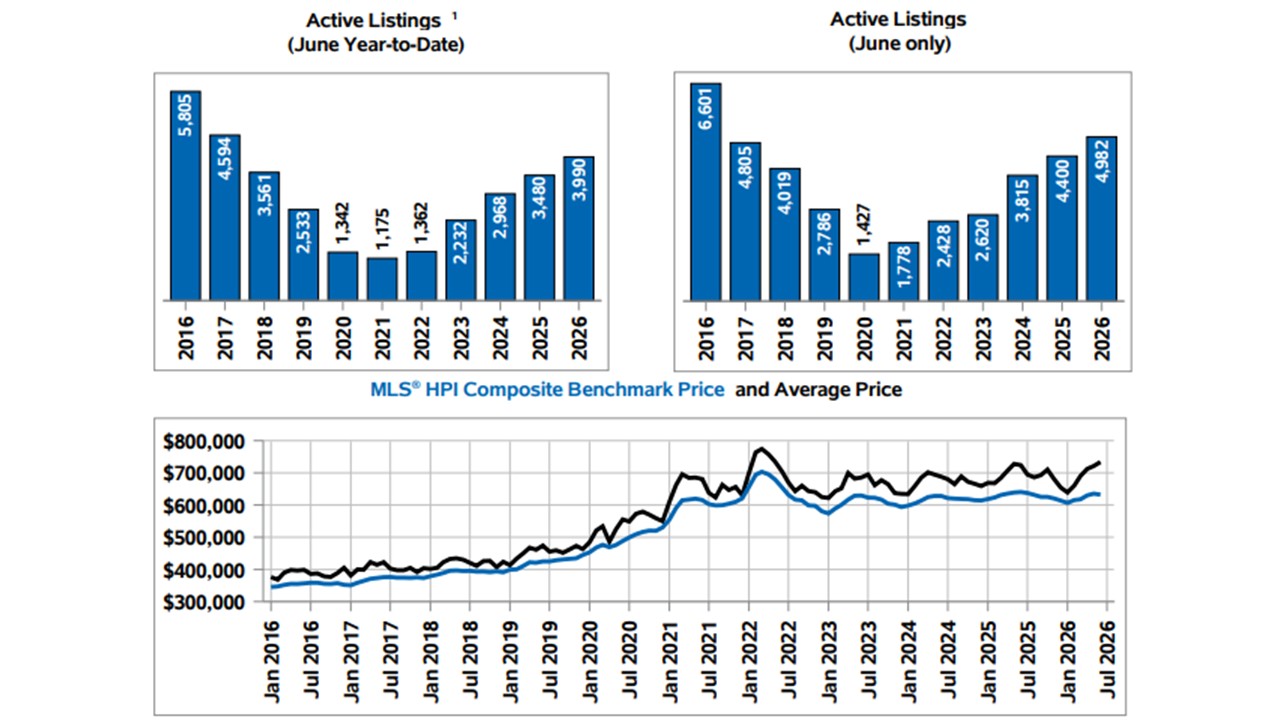
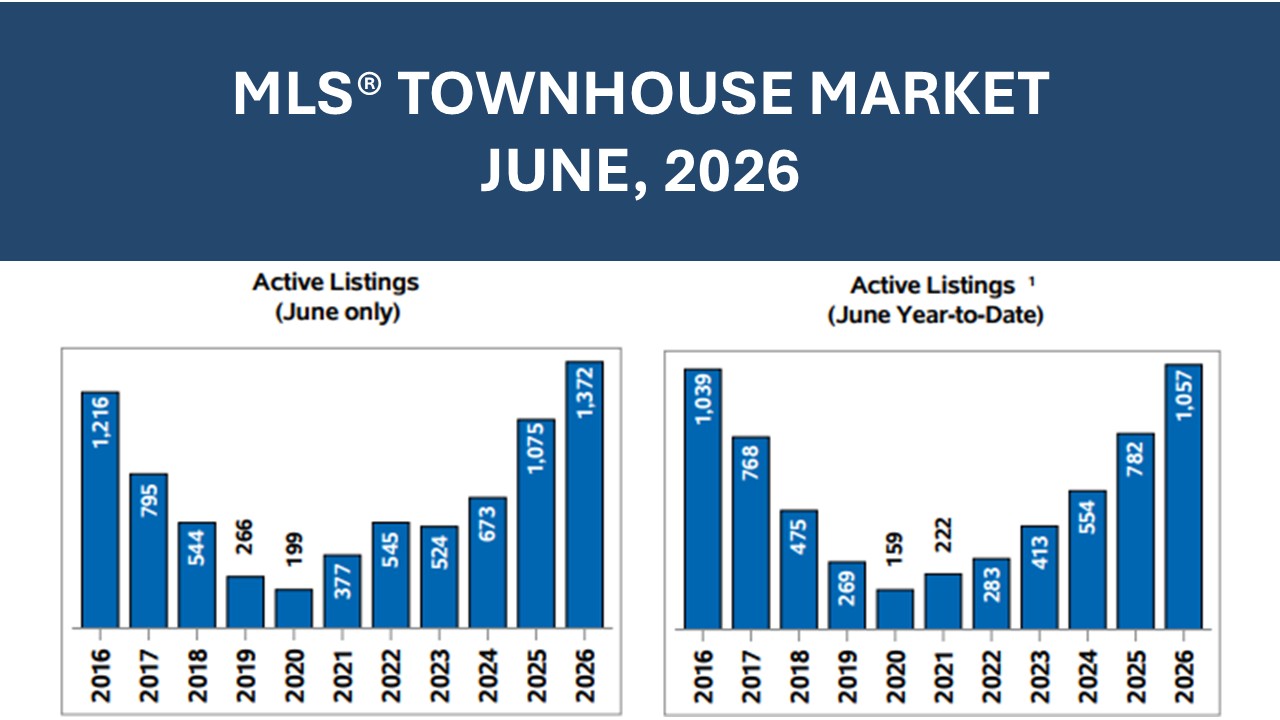
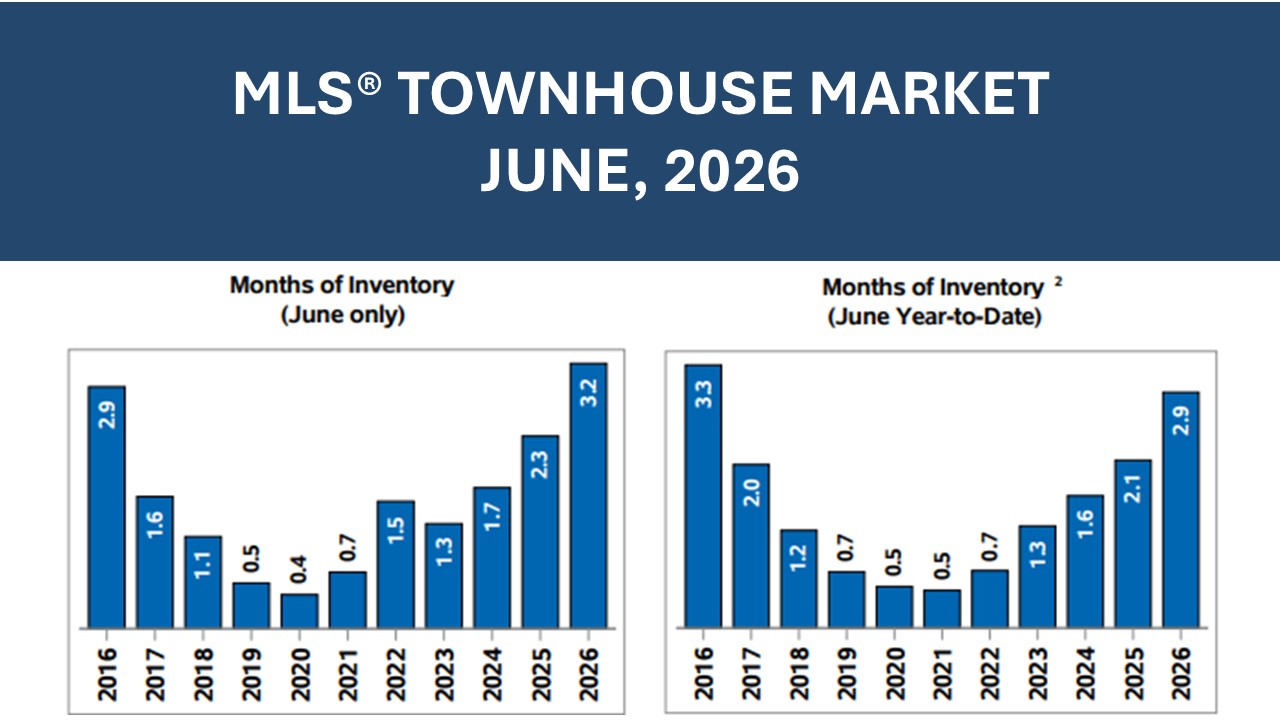
One of the biggest stories of 2026 remains inventory. Ottawa finished May with nearly 5,000 active listings, roughly 12% more than this time last year.
For buyers, that’s good news.
There are more homes to choose from, less pressure to make rushed decisions, and fewer situations where buyers feel forced into competing offers. For sellers, it means standing out has become increasingly important. Homes that are priced correctly and marketed properly continue to sell. Homes that miss the mark often sit longer and require price adjustments.
Home Prices Remain Remarkably Stable
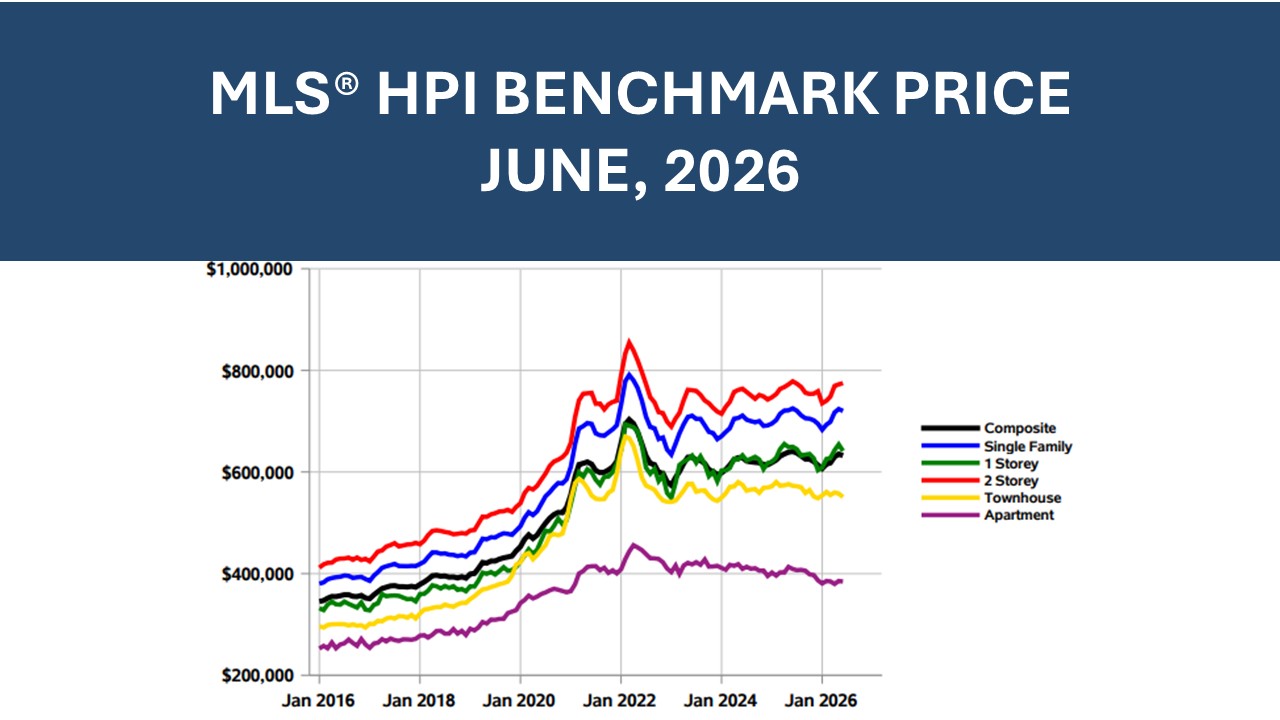
Despite slower sales and increased inventory, prices have held up surprisingly well.
The average home sold for $721,270 in May, while the median sale price reached $660,000. Both figures were only slightly below where they were a year ago.
This is important because it highlights something we’ve been talking about for months: Ottawa is not experiencing a market correction. Instead, we’re seeing a normalization.
The frantic pandemic-era market is behind us, but strong population growth, stable employment, and relatively affordable housing compared to Toronto and Vancouver continue to support values.
Not All Property Types Are Performing the Same
The biggest mistake someone can make right now is looking at one city-wide statistic and assuming it applies to every home. We talk about this in our podcast. Ottawa is the most spread out major city in Canada. There are lots of different dynamics at play depending on the neighbourhood. With central locations being extremely active.
Single-Family Homes Continue to Lead
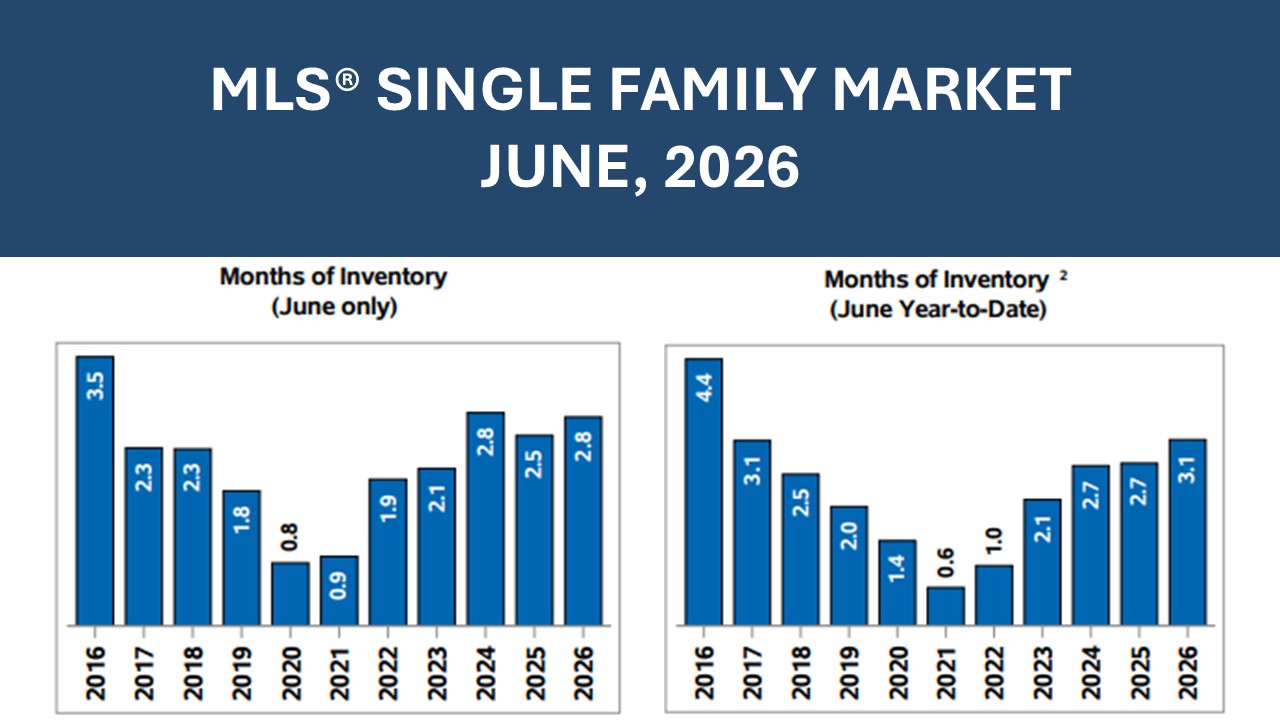
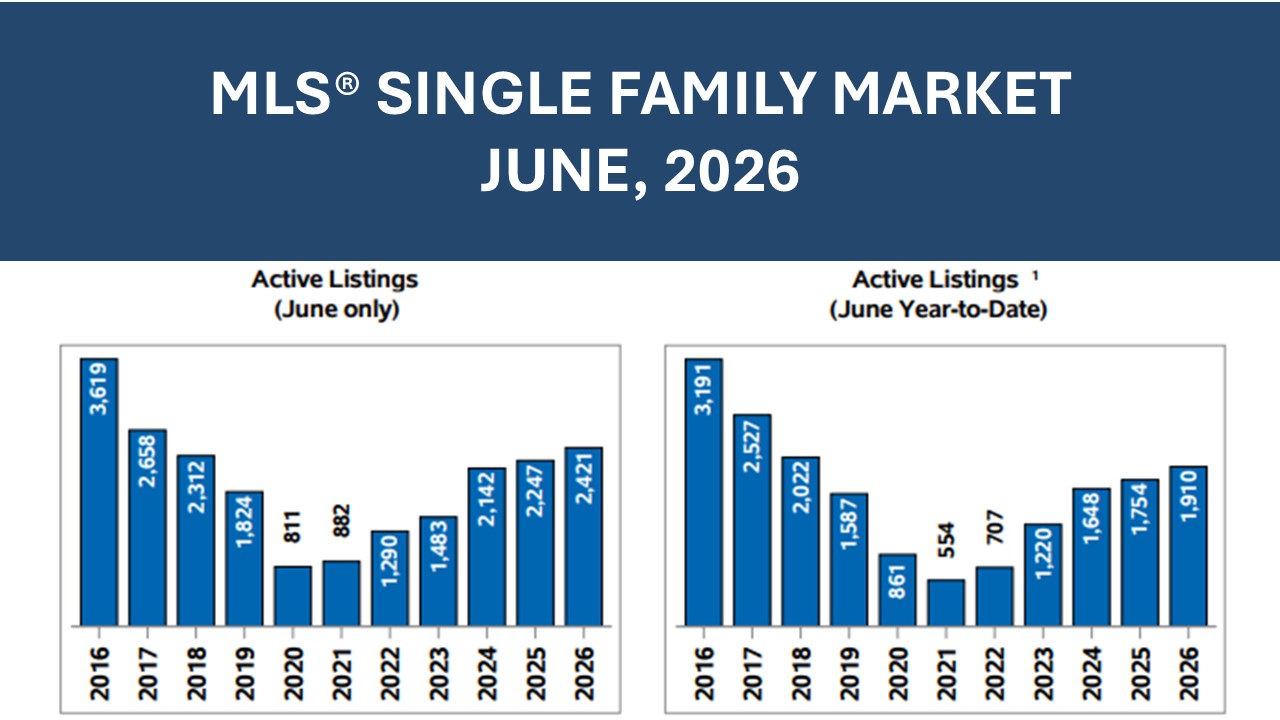
Detached homes remain the strongest segment of Ottawa’s market.
Benchmark pricing was slightly higher than last year, and median prices actually increased.
Townhomes Are Seeing More Competition
Townhomes remain popular, particularly with first-time buyers and military families, but increased inventory has created more competition. New builds took a huge chunk out of this segment in April and May. Leading to downward pressure on prices in this segment where builders have inventory: Kanata/Stittsville, Barrhaven.
Sales were down compared to last year, and pricing softened modestly. This isn’t a major concern, but it does mean sellers need to be realistic when setting expectations. Also, finding end units are selling much better than middle units in this segment.
Condos Remain the Softest Segment
Apartment-style condominiums continue to face the most pressure.
Higher carrying costs, increased inventory, and reduced investor demand have created a more challenging environment for condo sellers. Some of the older buildings’ condo fees are a runaway train! Buyers, have lots of choice in this segement. Getting a good deal is paramount.
What We’re Seeing on the Ground
Statistics are helpful, but they only tell part of the story.
What we’re seeing day-to-day is:
📈 Well-priced homes are still selling quickly, especially with the Chris Scott Team 🙂
🏡 Updated, move-in ready properties continue to outperform
💰 Buyers are negotiating more often than they were a year ago and walking from deals
📋 Conditional offers are becoming increasingly common
⏳ Overpriced homes are sitting longer and often selling after reductions
In many ways, this is what a healthy market looks like.
Neither buyers nor sellers have complete control, and success comes from strategy rather than simply relying on market momentum. In one word its BALANCED
What Happens Next?
As we move into summer, there are a few key indicators I’ll be watching closely:
● Inventory levels
● Days on market- our board will have more accurate numbers on this with new system
● Sale-to-list price ratios
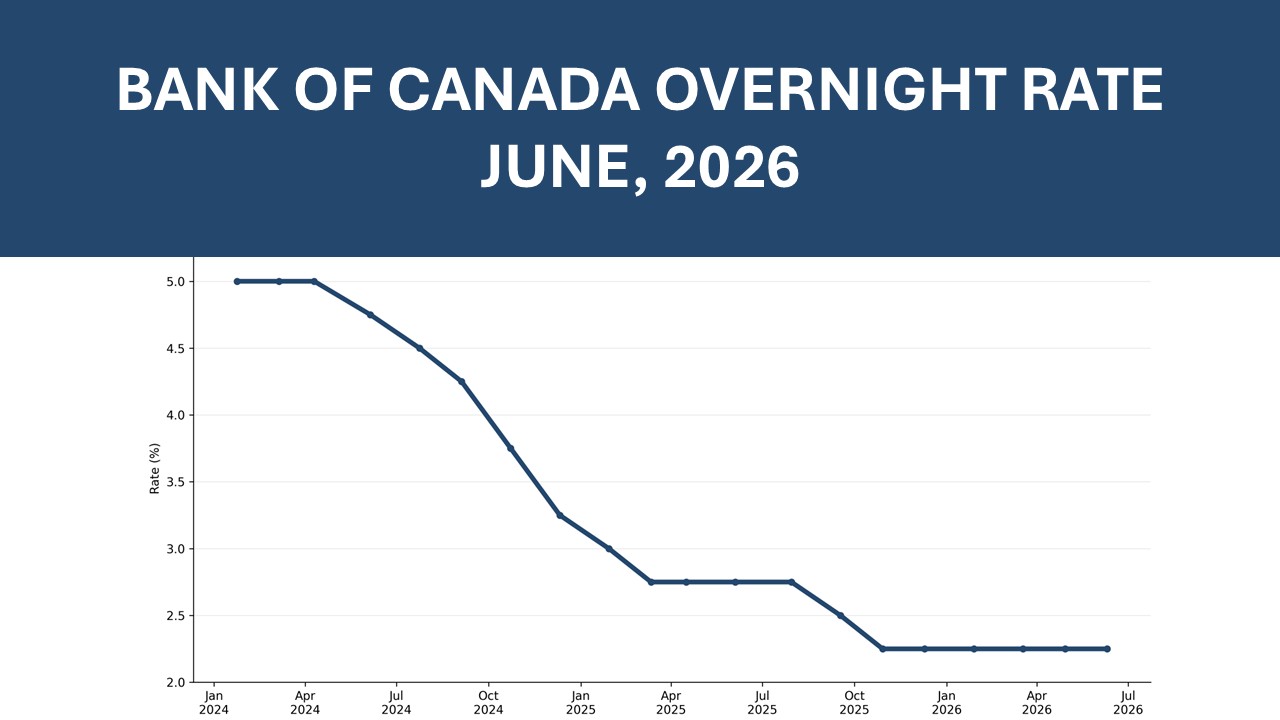
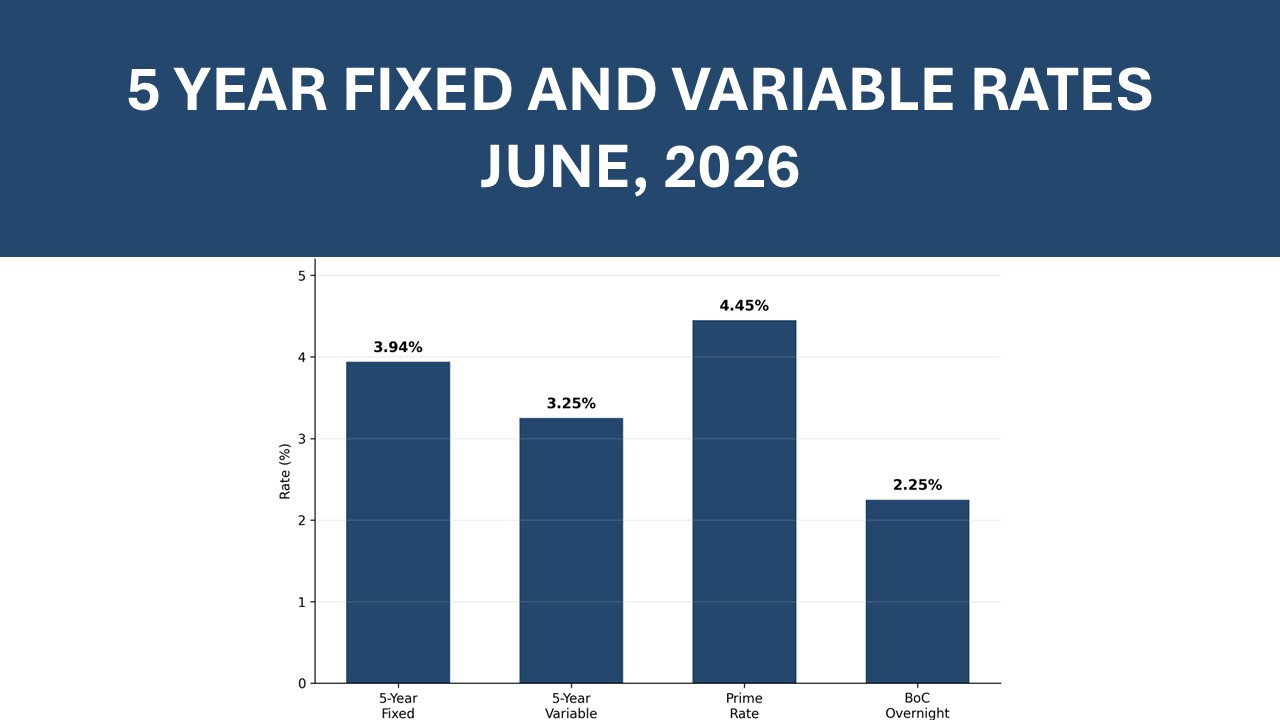
● Interest rate decisions – I predict variables to lower. Maybe slightly on fixed too
● Employment trends – Public service will be the one to watch.
● New housing supply entering the market
If buyer confidence improves and inventory remains manageable, Ottawa should continue to see stable pricing through the second half of the year.
My Take
May was another reminder that Ottawa remains one of Canada’s most stable real estate markets.
We’re not seeing runaway price growth, but we’re also not seeing significant declines. Instead, we’re seeing a balanced market where buyers have options, sellers can still achieve excellent results, and strategy matters more than timing.
If you’re thinking about buying or selling this year, the biggest advantage isn’t trying to predict the market, it’s understanding your specific neighbourhood, property type, and competition. And that’s where local knowledge makes all the difference.
If you’d like to know what’s happening specifically in your neighbourhood, reach out anytime. We’re always happy to provide a personalized market update for your area.
Ottawa’s real estate market is anything but uniform. In this edition of our Suburban Statistics Series, we’re examining how the city’s five largest suburban neighbourhoods are performing and where trends are emerging. The data below compares OREB MLS sales from January 1 through June 1, 2026, to the same period in 2025. It also captures the strongest year-over-year jump in sales activity we’ve seen in 2026.
As part of our Suburban Statistics Series, we’re taking a closer look at Ottawa’s five largest urban neighbourhoods. With such a large and diverse city, market conditions can vary significantly from one area to another. The statistics below compare MLS sales reported through OREB between January 1 and May 1, 2026, against the same period in 2025.
There’s a lot of conversation right now about where the market is headed as we move into spring, and in this episode we unpack the key factors shaping real estate in Ottawa at the moment.
We look at how global and political conditions, including ongoing conflict in the Middle East, inflationary pressure, and Canada’s current majority government are influencing overall economic confidence. We also dive into interest rates, including recent movement in the five-year fixed, and what that means for buyers and sellers trying to plan their next move.
Another key topic is the recent HST change on new build homes under $1 million, and how that’s already impacting new construction activity across the city. With that surge in new build demand, we also explore the natural follow-up question: could this shift eventually affect resale inventory and pricing?
As always, we bring it back to what we’re actually seeing on the ground in Ottawa right now — increasing activity, more conversations with clients, and a market that’s starting to gain momentum as we move deeper into spring.
If you want a clearer picture of where things are heading and how all of these factors connect, this episode lays it out in a straightforward, practical way.
Here’s the latest update in our Suburban Statistics Series, highlighting insights from the five largest urban neighborhoods in Ottawa. Given the city’s expansive layout, it’s always interesting to see how market trends differ across each area. These statistics compare MLS OREB sales from January 1 to April 1, 2026, with the same period in 2025.
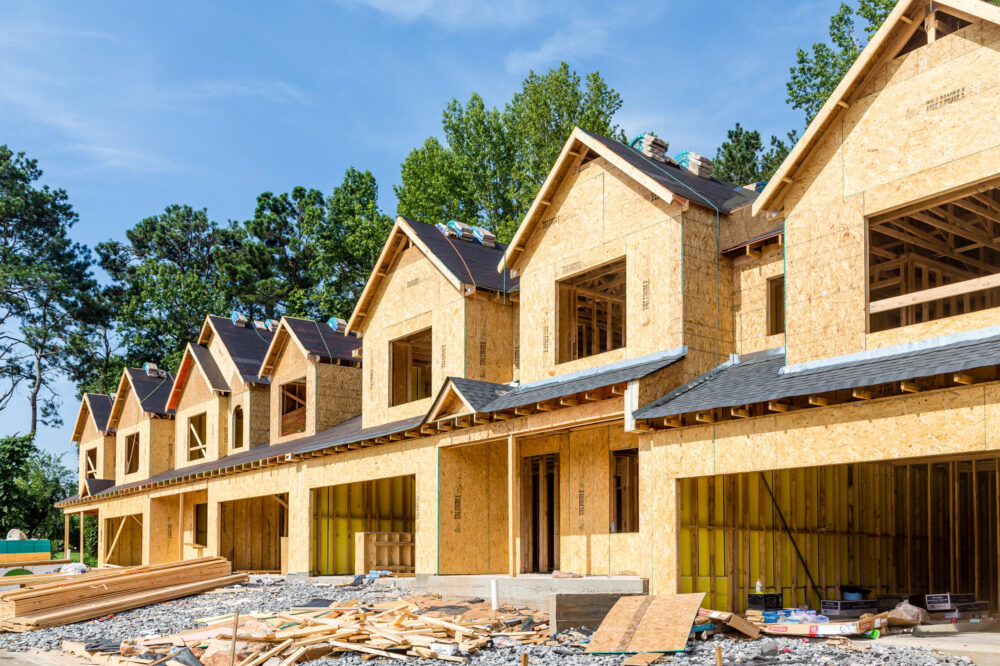
New Row House Construction with wood sheathing and asphalt roof
There’s been a big announcement this week from the Province of Ontario, and it’s one that could have a meaningful impact on buyers—especially those considering new construction.
In partnership with the federal government, Ontario is expanding the HST rebate on new homes for a limited time, with the goal of improving affordability and encouraging more housing development.
More specifically, the province is planning to temporarily remove the Harmonized Sales Tax (HST) on new homes for qualifying buyers. The full 13% tax would be eliminated on homes valued up to $1 million from April 1, 2026 to March 31, 2027.
For homes priced between $1 million and $1.5 million, buyers would still qualify for the maximum rebate of up to $130,000, with the rebate gradually decreasing for higher-priced homes—down to approximately $24,000 for homes valued at $1.85 million.
Let’s break down what this actually means.
What changed? Under this new program, the province is temporarily expanding the rebate structure so that significantly more buyers—and a wider range of home prices—can benefit over a one-year period.
Why this matters From a real estate perspective, this is a pretty strategic move.
New construction has been one of the biggest pressure points in Ontario’s housing supply. Between rising construction costs, interest rates, and slower buyer activity, many builders have pulled back or delayed projects.
This rebate is designed to do two things:
Stimulate demand by lowering the effective purchase price for buyers
Encourage builders to move forward with projects
And in a market like Ottawa—where we rely heavily on a steady pipeline of new housing—this could help bring more inventory online.
What it means for buyers If you’re considering a new build, this is where things get interesting.
A rebate of this size can:
Reduce your upfront cost significantly
Improve affordability on higher price points
Potentially allow buyers to stretch into a better product or location
That said, timing will matter. This is a temporary program, and we’ll likely see increased competition in the new construction space as buyers start to take advantage of it.
The bigger picture This announcement is really about one thing: supply.
Governments at both levels are trying to unlock more housing by making projects more viable and encouraging buyers back into the market.
Will it solve everything? No. But it’s a meaningful step—and one that could create opportunities for buyers who understand how to position themselves.
Final thoughts If you’re thinking about buying a new build this year, this is worth paying close attention to.
There may be a window here where:
Pricing is still relatively stable
Incentives are strong
Inventory is improving
And those three things don’t always line up.
As always, the key is understanding how this fits into your overall plan—whether that’s buying your next home, relocating, or investing.
If you want to walk through how this impacts your specific situation, happy to chat.
Every year people ask the same question around this time: what will the spring market look like? The reality is that Ottawa tends to follow a very predictable rhythm. Once the sun starts coming out and the snow begins to disappear, activity picks up quickly. We are starting to see exactly that happen now.
Over the past few weeks we’ve had a noticeable increase in inquiries from both buyers and sellers trying to plan their next move. Many homeowners who were sitting on the sidelines during the winter are getting ready to list, which means buyers should see a healthy amount of inventory this spring.
Colin mentioned on the podcast that the shift has been noticeable even compared to a month ago. Homes that were sitting for a while over the winter are beginning to move, showings are increasing, and buyers are starting to re-engage with the market. Ottawa often waits for a little sunshine before things really get going, and that moment seems to be arriving.
One topic that has been coming up a lot lately is the use of first refusal conditions in offers.
A first refusal clause allows a buyer to purchase a home conditionally while still needing to sell their own property. The home they are buying remains on the market, and if another buyer submits an acceptable offer, the original buyer is given a set period of time (often 24–48 hours) to remove their condition and proceed with the purchase. If they cannot, the seller is free to accept the new offer.
In a market where many homeowners need to sell before they buy, this clause can be a useful tool. It gives buyers an opportunity to secure a home while still protecting themselves if their current property hasn’t sold yet. At the same time, it allows sellers to keep marketing the property and maintain leverage if another offer comes in.
The bigger question many clients are asking right now is whether it’s better to buy first or sell first. There isn’t a one-size-fits-all answer. It depends on inventory, price point, and how comfortable someone is carrying risk during the transition. In the episode we walk through what we are currently seeing in the market and how our clients are approaching that decision.
With inventory expected to grow and activity starting to build, this spring should provide good opportunities for both buyers and sellers who are prepared.
If you’re curious about where the market is heading or how strategies like first refusal clauses work in real situations, make sure to check out the full podcast episode where we break it all down.