
From the blog...
Ottawa Real Estate Market Update: August 2026
The Ottawa real estate market slowed noticeably in August, with sales falling more sharply than we would typically expect at this point in the summer. At the same time, home prices have remained relatively stable, creating a market where buyers have more choice and negotiating power, while sellers need to be increasingly thoughtful about pricing and positioning. This does not apply to a few hot spots in the Ottawa market like Old Ottawa South and part of the Glebe.
Ottawa Home Sales Slow in August
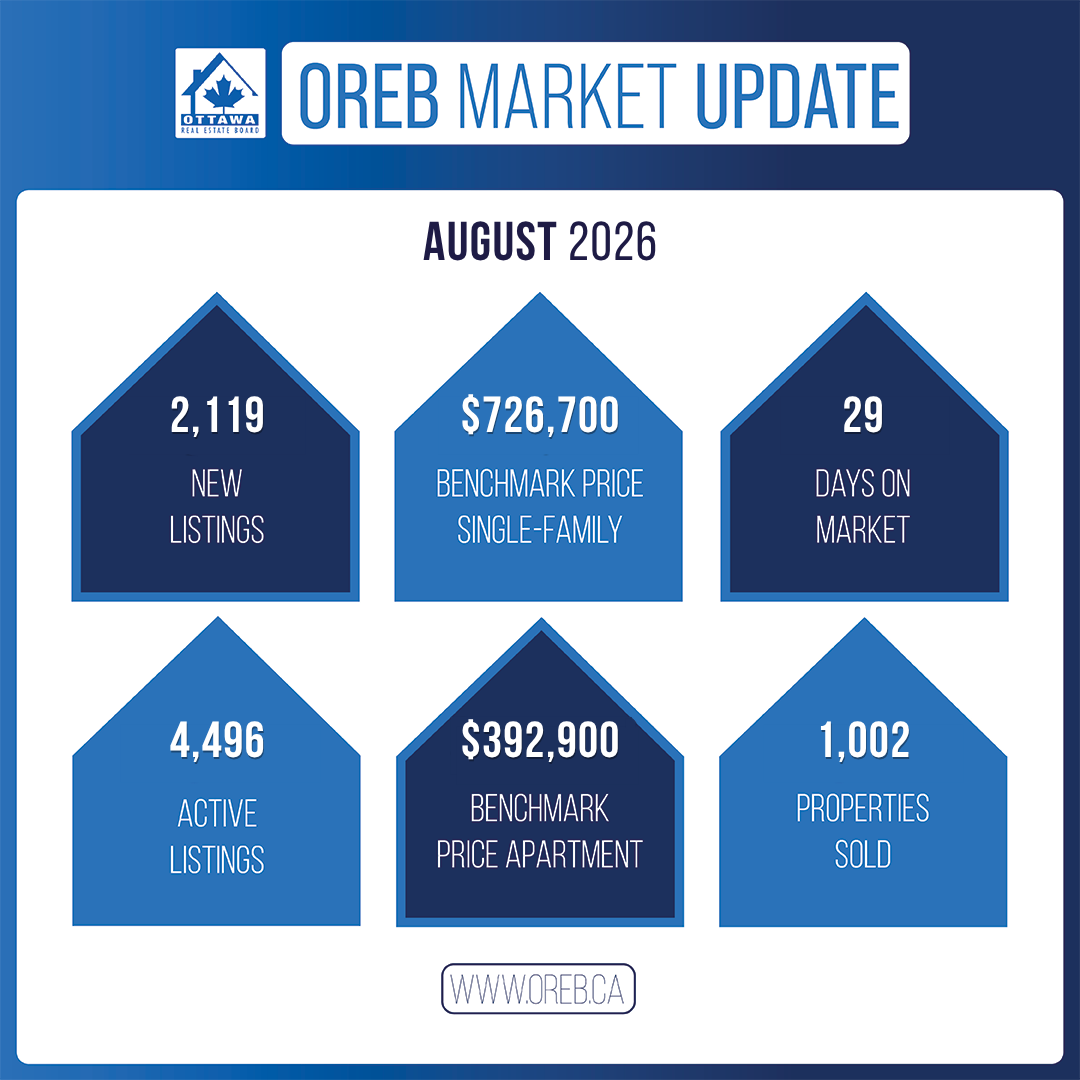
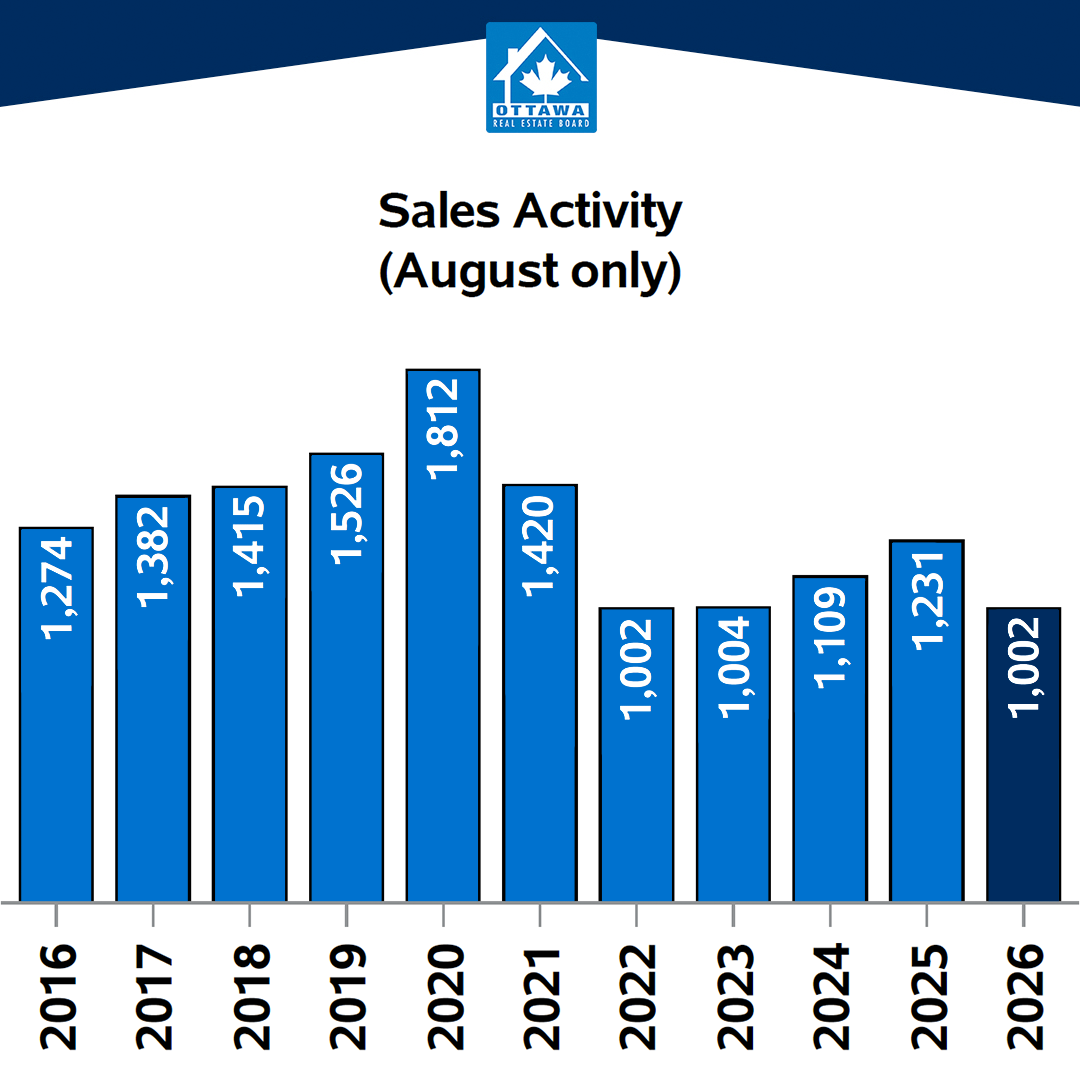
A total of 1,002 homes sold in Ottawa in August, representing an 18.6% decrease compared to August 2025 and a significant 24.4% decline from July.
Some month-to-month slowdown is normal during the summer, but this year’s decline was considerably larger. Over the previous 10 years, the typical decrease in sales from July to August was just 5.8%.
The slowdown was also seen across all major property types:
- Single-family home sales declined 16.3% year over year
- Townhouse sales declined 19.9%
- Apartment sales declined 22.3%
Year to date, Ottawa has recorded 9,283 home sales, down 6.9% compared to the same period in 2025.
Ottawa Home Prices Remain Relatively Stable
Despite the significant slowdown in sales, prices have held up reasonably well.
The average residential sale price was $688,253, up 0.3% from August 2025. The MLS® Home Price Index composite benchmark price reached $637,700, up 1.0% year over year.
The median sale price was $622,357, down 1.2% compared to last August.
This is an important distinction in the current market. We are seeing fewer transactions and buyers taking more time to make decisions, but that has not translated into a significant decline in overall Ottawa home values.
Buyers Have More Choice
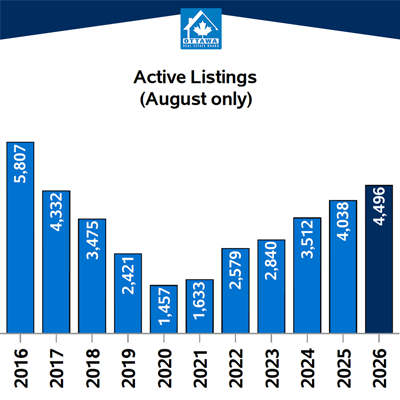
There were 4,496 active listings in Ottawa at the end of August, an increase of 11.3% from the same time last year.
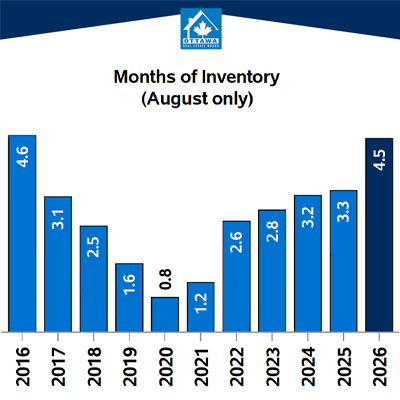
Months of inventory increased from 3.5 months in July to 4.5 months in August — the highest August level since 2016.
The sales-to-new-listings ratio also declined to 47.3%.
Together, these numbers point toward a more balanced and increasingly buyer-friendly environment. Buyers generally have more properties to choose from, more time to make decisions and, depending on the property, greater ability to negotiate.
For sellers, this means that simply putting a home on the market and waiting for buyers to compete is not a reliable strategy. Pricing, presentation and marketing all matter considerably in the current environment.
Single-Family Homes Remain Relatively Strong
There are also important differences depending on the type of property you’re selling.
Single-family homes have remained the most stable of Ottawa’s major housing segments. Their benchmark price was up 2.2% year over year, with approximately four months of inventory.
Townhouses are experiencing more pressure, with active listings up 27.1% from last year and the benchmark price down 4.0%.
Apartments remain the softest segment of the Ottawa market, with 6.3 months of inventory and a median of 42 days on market.
This is why looking only at the overall Ottawa average doesn’t tell the whole story. Conditions can vary considerably depending on the type of home, price range and neighbourhood.
How Are Different Parts of Ottawa Performing?
The slowdown wasn’t limited to one part of the city.
Ottawa’s suburban markets continued to account for more than 70% of residential sales in August, although sales declined year over year across the west, east and south suburban areas.
Ottawa Suburb West was the strongest of the three major suburban markets, recording 3.6 months of inventory and a sales-to-new-listings ratio of 51.9%.
Interestingly, Ottawa Rural West was the only submarket to record an increase in sales compared to last year, although the relatively small number of transactions means that result should be interpreted cautiously.
Conditions were softer in central Ottawa and Ottawa Rural East, where inventory levels were considerably higher.
What Does This Mean for Ottawa Sellers?
The market is slower, but homes are still selling.
The important difference is that buyers have become more selective. With more competition on the market, homes that are priced too aggressively can sit while buyers choose better-positioned alternatives.
For anyone currently selling, I think it’s important to regularly review three things: recent sales, new competing listings and buyer activity on your property.
If the market is providing feedback through limited showings or repeated objections to price, sellers need to be willing to respond.
At the same time, Ottawa prices have remained relatively resilient, so this isn’t necessarily a market where sellers need to panic. It’s a market that rewards realistic pricing and a strong strategy.
Looking Ahead to the Fall Ottawa Real Estate Market
The big question is whether August was simply a particularly slow summer month or the beginning of a more sustained slowdown.
There are some encouraging economic signs, but uncertainty remains. The market report notes that CMHC expects Ottawa sales to stabilize, while increasing supply and slower demand growth could limit price appreciation.
As we move into September and the fall market, we’ll be watching sales activity, inventory and new listings closely.
For buyers, the current environment may provide opportunities that weren’t available in more competitive markets.
For sellers, understanding the specific conditions surrounding your neighbourhood and property type will be increasingly important.
Thinking about buying or selling a home in Ottawa? Every neighbourhood and price range is behaving differently right now. Reach out to the Chris Scott Team for an up-to-date look at what’s happening in your specific area and how the current market could impact your plans.
Tags: Amount, Average, Average Ottawa Home Prices, Buy, Buyer, Buying, Buying in Ottawa, Condo, Cost, Detached, House, Housing, Listings, Market, MLS, Ottawa, Ottawa Home Prices, Ottawa Housing Market, Ottawa Market Stats, Ottawa MLS Sales, Ottawa Real Estate, Ottawa Realtor, Price, Recap, Report, Review, Sell, Seller, Selling, Selling in Ottawa, Townhome, Townhouse, Units, Update