Posts Tagged ‘House’
Posted on: September 11th, 2026 by Chris Scott
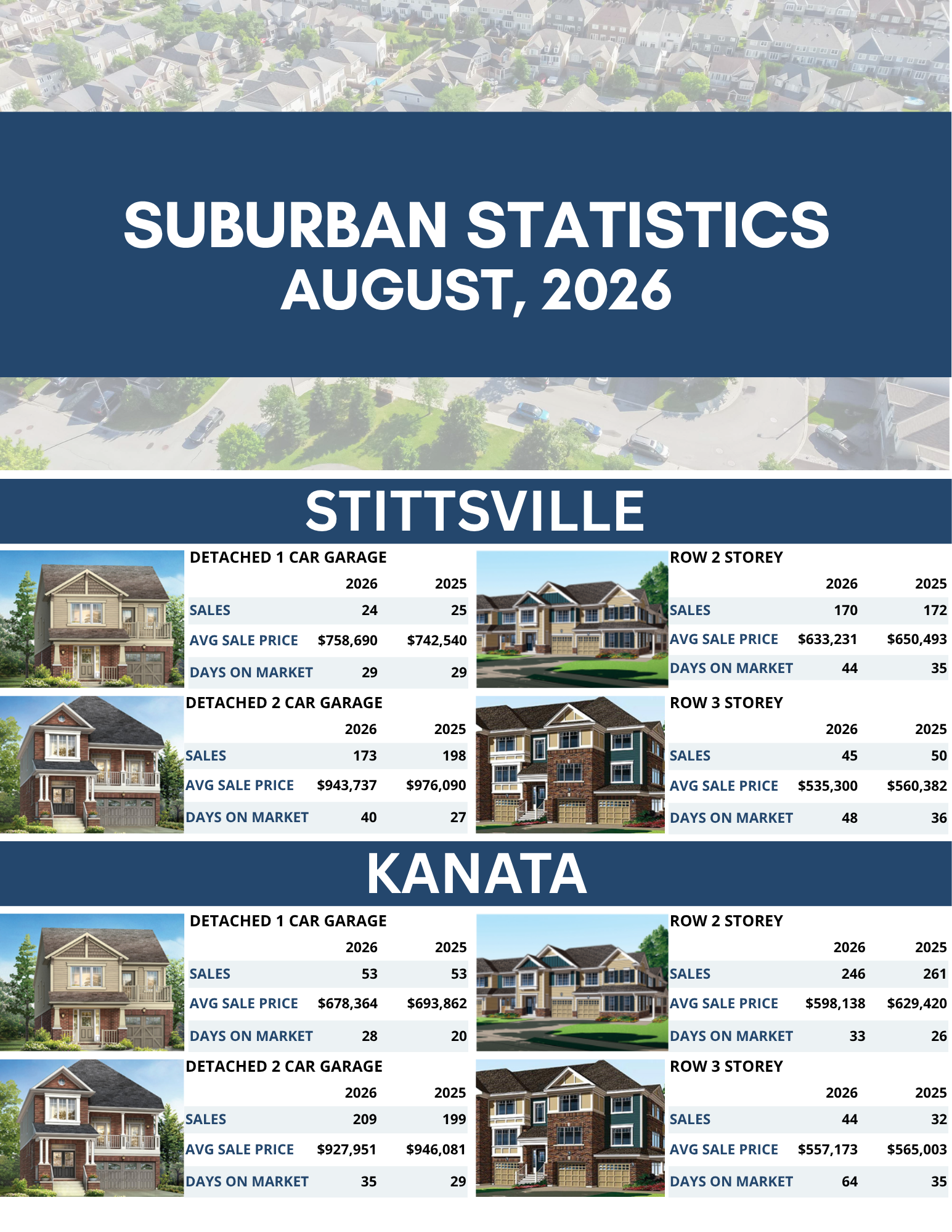
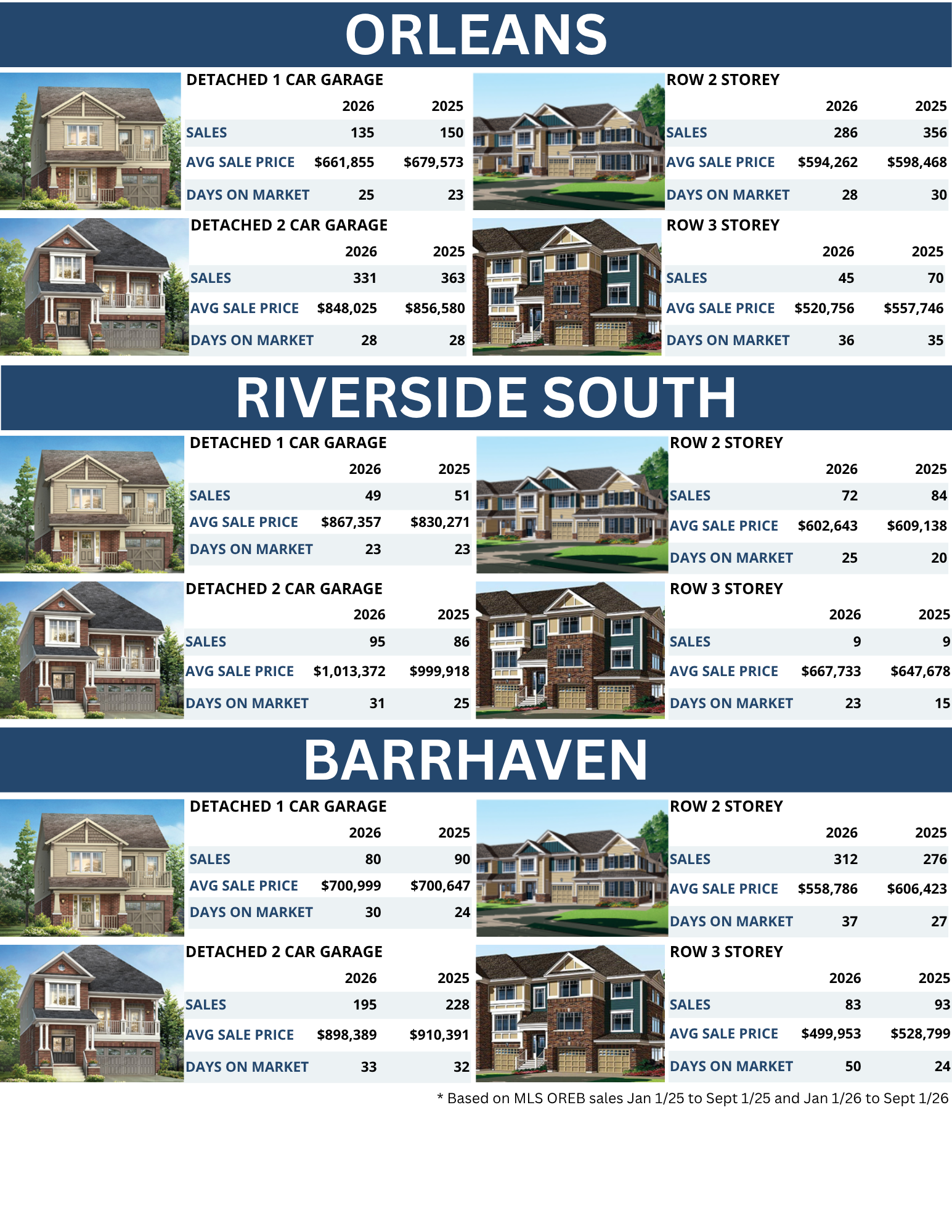
Ottawa’s real estate market continues to tell a different story from one neighbourhood to the next. While city-wide statistics provide a useful snapshot, sales activity, pricing trends, and buyer demand can vary significantly across individual communities.
In this August edition of our Suburban Statistics Series, we’re taking a closer look at five of Ottawa’s major suburban markets to see how each has performed so far in 2026. Using MLS® sales reported through OREB, we’ve compared activity from January 1 to August 31, 2026, with the same period in 2025 to highlight the trends taking shape across Ottawa’s suburban communities.
Posted on: September 4th, 2026 by Chris Scott
The Ottawa real estate market slowed noticeably in August, with sales falling more sharply than we would typically expect at this point in the summer. At the same time, home prices have remained relatively stable, creating a market where buyers have more choice and negotiating power, while sellers need to be increasingly thoughtful about pricing and positioning. This does not apply to a few hot spots in the Ottawa market like Old Ottawa South and part of the Glebe.
Ottawa Home Sales Slow in August
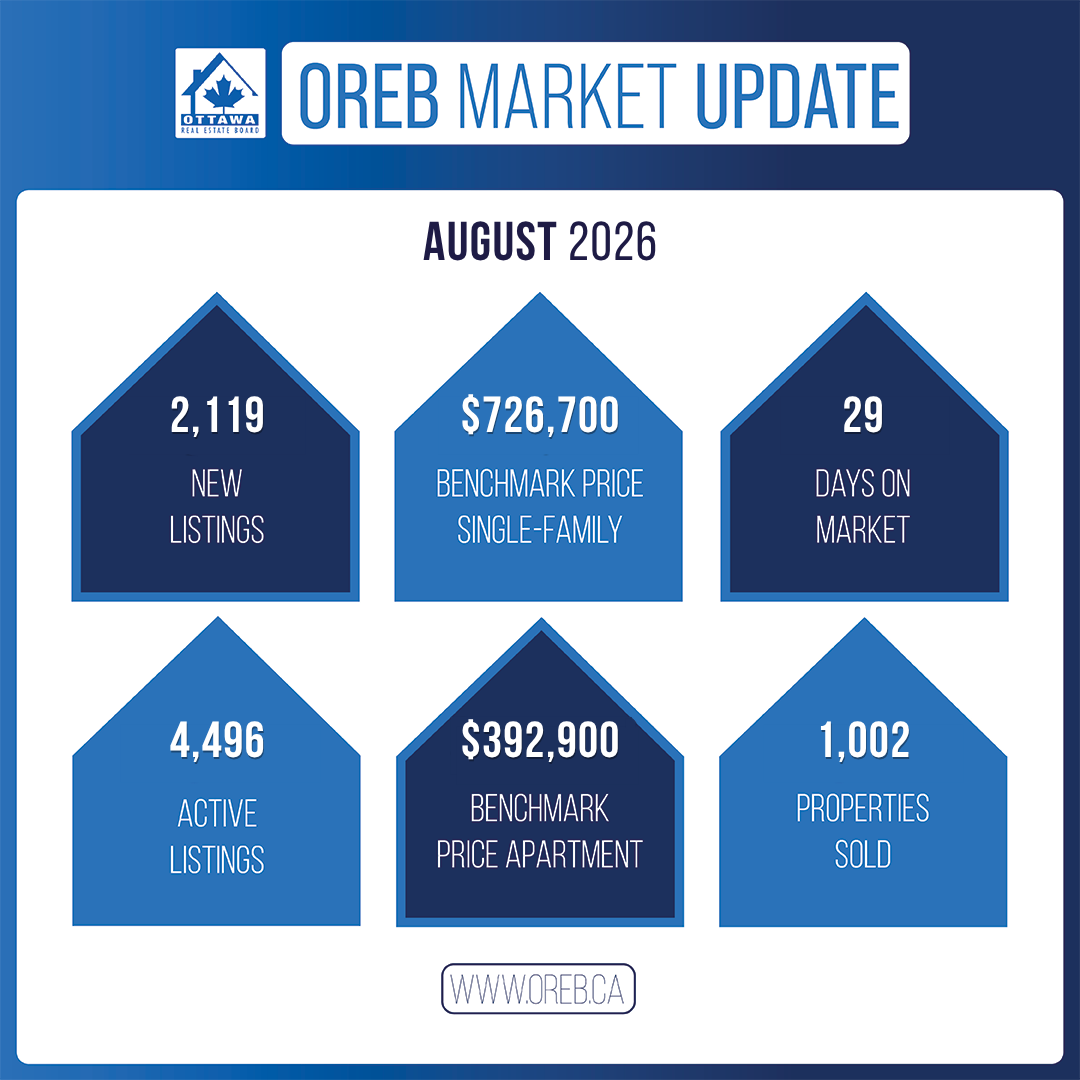
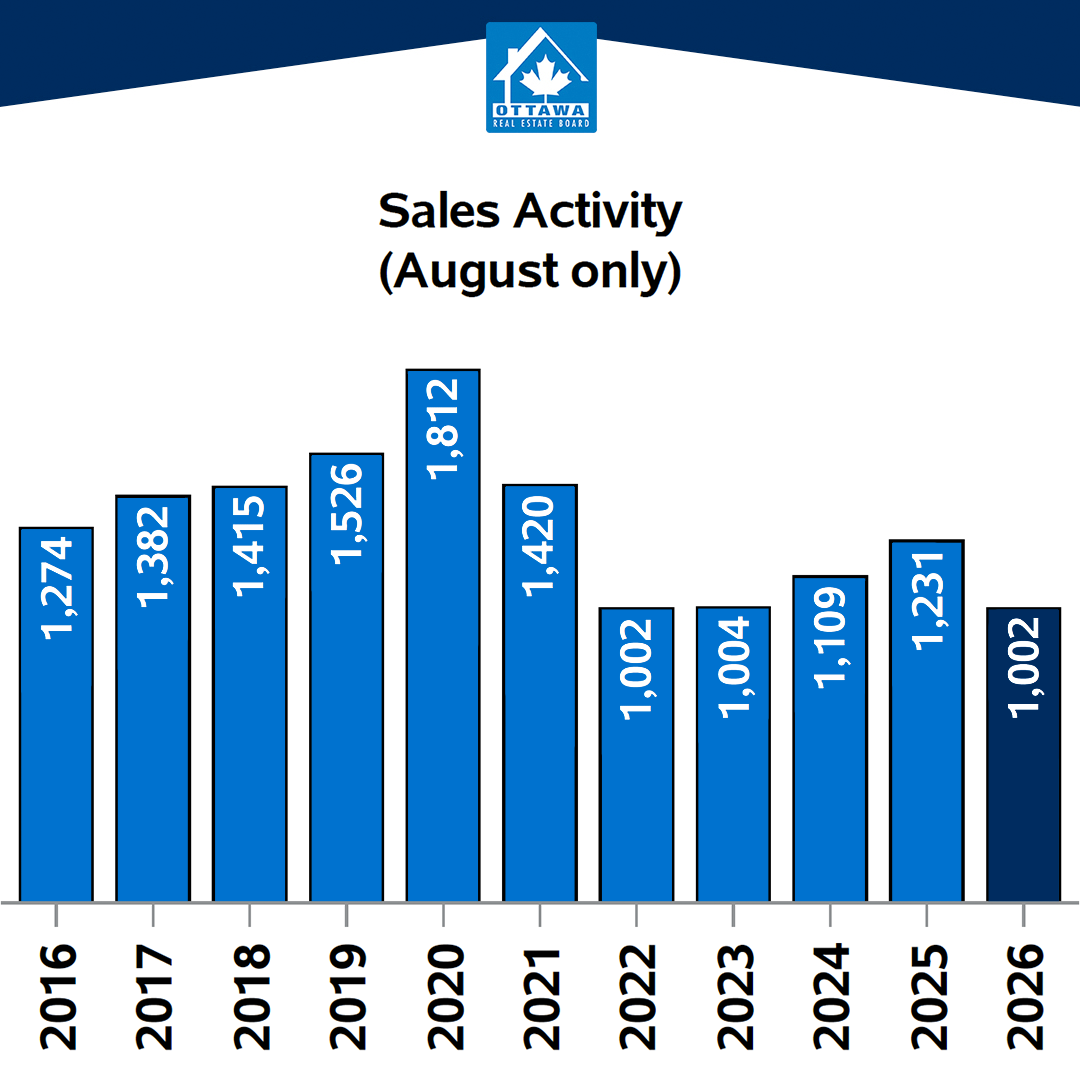
A total of 1,002 homes sold in Ottawa in August, representing an 18.6% decrease compared to August 2025 and a significant 24.4% decline from July.
Some month-to-month slowdown is normal during the summer, but this year’s decline was considerably larger. Over the previous 10 years, the typical decrease in sales from July to August was just 5.8%.
The slowdown was also seen across all major property types:
- Single-family home sales declined 16.3% year over year
- Townhouse sales declined 19.9%
- Apartment sales declined 22.3%
Year to date, Ottawa has recorded 9,283 home sales, down 6.9% compared to the same period in 2025.
Ottawa Home Prices Remain Relatively Stable
Despite the significant slowdown in sales, prices have held up reasonably well.
The average residential sale price was $688,253, up 0.3% from August 2025. The MLS® Home Price Index composite benchmark price reached $637,700, up 1.0% year over year.
The median sale price was $622,357, down 1.2% compared to last August.
This is an important distinction in the current market. We are seeing fewer transactions and buyers taking more time to make decisions, but that has not translated into a significant decline in overall Ottawa home values.
Buyers Have More Choice
There were 4,496 active listings in Ottawa at the end of August, an increase of 11.3% from the same time last year.
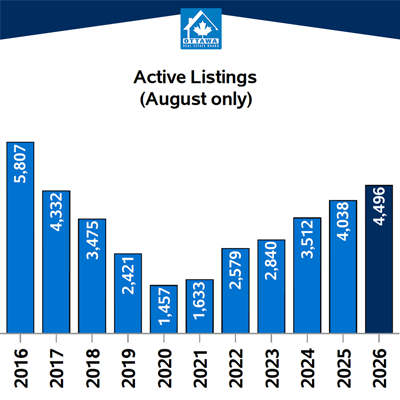
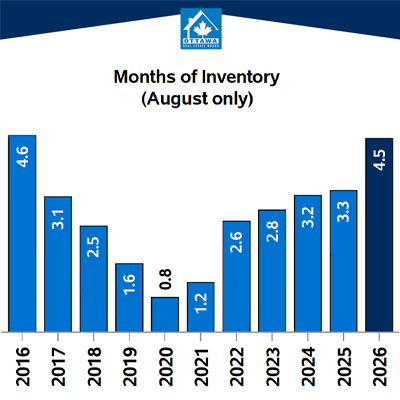
Months of inventory increased from 3.5 months in July to 4.5 months in August — the highest August level since 2016.
The sales-to-new-listings ratio also declined to 47.3%.
Together, these numbers point toward a more balanced and increasingly buyer-friendly environment. Buyers generally have more properties to choose from, more time to make decisions and, depending on the property, greater ability to negotiate.
For sellers, this means that simply putting a home on the market and waiting for buyers to compete is not a reliable strategy. Pricing, presentation and marketing all matter considerably in the current environment.
Single-Family Homes Remain Relatively Strong
There are also important differences depending on the type of property you’re selling.
Single-family homes have remained the most stable of Ottawa’s major housing segments. Their benchmark price was up 2.2% year over year, with approximately four months of inventory.
Townhouses are experiencing more pressure, with active listings up 27.1% from last year and the benchmark price down 4.0%.
Apartments remain the softest segment of the Ottawa market, with 6.3 months of inventory and a median of 42 days on market.
This is why looking only at the overall Ottawa average doesn’t tell the whole story. Conditions can vary considerably depending on the type of home, price range and neighbourhood.
How Are Different Parts of Ottawa Performing?
The slowdown wasn’t limited to one part of the city.
Ottawa’s suburban markets continued to account for more than 70% of residential sales in August, although sales declined year over year across the west, east and south suburban areas.
Ottawa Suburb West was the strongest of the three major suburban markets, recording 3.6 months of inventory and a sales-to-new-listings ratio of 51.9%.
Interestingly, Ottawa Rural West was the only submarket to record an increase in sales compared to last year, although the relatively small number of transactions means that result should be interpreted cautiously.
Conditions were softer in central Ottawa and Ottawa Rural East, where inventory levels were considerably higher.
What Does This Mean for Ottawa Sellers?
The market is slower, but homes are still selling.
The important difference is that buyers have become more selective. With more competition on the market, homes that are priced too aggressively can sit while buyers choose better-positioned alternatives.
For anyone currently selling, I think it’s important to regularly review three things: recent sales, new competing listings and buyer activity on your property.
If the market is providing feedback through limited showings or repeated objections to price, sellers need to be willing to respond.
At the same time, Ottawa prices have remained relatively resilient, so this isn’t necessarily a market where sellers need to panic. It’s a market that rewards realistic pricing and a strong strategy.
Looking Ahead to the Fall Ottawa Real Estate Market
The big question is whether August was simply a particularly slow summer month or the beginning of a more sustained slowdown.
There are some encouraging economic signs, but uncertainty remains. The market report notes that CMHC expects Ottawa sales to stabilize, while increasing supply and slower demand growth could limit price appreciation.
As we move into September and the fall market, we’ll be watching sales activity, inventory and new listings closely.
For buyers, the current environment may provide opportunities that weren’t available in more competitive markets.
For sellers, understanding the specific conditions surrounding your neighbourhood and property type will be increasingly important.
Thinking about buying or selling a home in Ottawa? Every neighbourhood and price range is behaving differently right now. Reach out to the Chris Scott Team for an up-to-date look at what’s happening in your specific area and how the current market could impact your plans.
Posted on: August 26th, 2026 by Chris Scott
One of the most common questions we get from homeowners preparing to sell is whether they should renovate before putting their home on the market. The answer is usually: it depends… and don’t start spending money just yet.
There are certainly improvements that can help your home sell faster or for more money. But there are also renovations that cost far more than you’ll ever get back when you sell.
Start With the Easy Stuff
Before considering a major renovation, take care of the smaller things buyers will notice. Fresh paint, updated light fixtures, repairing damaged trim, replacing worn carpet and taking care of obvious maintenance items can make a surprisingly big difference.
These aren’t exciting renovations, but they can make a home feel cleaner, newer and better maintained without a huge investment. You will almost always recoup the investment on these items. The bonus will also be that you will sell quicker.
Be Careful With Kitchens and Bathrooms
Kitchens and bathrooms are important to buyers, but that doesn’t automatically mean you should renovate them before selling.
Spending $50,000 on a new kitchen doesn’t necessarily increase the value of your home by $50,000. Sometimes an older but well-maintained kitchen is perfectly acceptable, particularly if the home is priced accordingly.
There are also plenty of buyers who would rather renovate themselves and choose their own finishes.
Think About Your Competition
This is where the Ottawa market matters. If you’re selling in a neighbourhood where most competing homes have renovated kitchens, updated bathrooms and finished basements, an original home may need to be priced differently.
On the other hand, if homes in your area are generally similar in age and condition, spending heavily to make yours the most renovated house on the street may not make financial sense.
Presentation Can Be More Important Than Renovation
A home doesn’t need to be brand new to show well. Professional staging, great photography, fresh paint, good lighting and removing excess furniture can completely change how buyers perceive a property.
Sometimes a few thousand dollars spent preparing and presenting a home properly can have a greater impact than a much larger renovation. Keep in mind that our team will help you along the way to make sure you are making the right decisions. We have a great staging team!
Talk to a Realtor Before You Renovate
This is probably our biggest piece of advice. If you’re planning to sell within the next year or two, have a Realtor look at the property beforeyou start spending money. We can compare your home with recent sales, look at your competition, and identify which improvements are likely to make a difference.
You may discover that the $30,000 renovation you were considering isn’t necessary at all.
When you’re preparing to sell, the goal isn’t to make your home perfect. The goal is to spend money where buyers are most likely to notice it — and avoid spending it where they won’t.
Posted on: August 25th, 2026 by Chris Scott
You listed your home expecting showings and offers. Instead, a few weeks have passed, activity has slowed down and you’re starting to wonder, why isn’t my house selling?
There usually isn’t just one reason, but after years of selling homes in Ottawa, we’ve found that most situations come back to a few key factors.
The Price
Let’s start with the obvious one. If buyers are viewing comparable homes but consistently choosing something else, your asking price may be part of the problem.
Today’s buyers have access to an incredible amount of information. They’re looking at listings every day, receiving notifications when new properties hit the market and comparing your home against everything else available. They generally know when something feels expensive. In our market now buyers wont buy unless they feel they are getting good value.
That doesn’t necessarily mean you need a huge price reduction. But if the market is consistently telling you that your home isn’t competitive, it’s worth listening.
The Presentation
Buyers often decide whether they’re interested in a home before they ever walk through the front door. Your photos, staging and online presentation matter.
Dark photography, cluttered rooms or an exterior that doesn’t photograph well can cause buyers to skip over a perfectly good house. You only get one opportunity to make that first impression.
The Competition Changed
Your home doesn’t exist in a vacuum. Maybe your price made sense when you listed, but three similar homes have since come onto the market at lower prices. Or perhaps another seller reduced their price and suddenly became your biggest competition. A good pricing strategy needs to respond to what’s happening around you.
You’ve Been on the Market Too Long
The first days and weeks of a listing are important because that’s when your home is new. Buyers who have been waiting for something like your property will see it almost immediately.
As time passes, that pool of buyers gets smaller. Eventually, buyers may start asking what’s wrong with the house simply because it has been available for a while.
That’s why it’s important to recognize when something isn’t working and make adjustments rather than simply waiting.
Sometimes the Market Is Just Slow
Not every problem is the house. Interest rates, inventory levels, economic uncertainty, holidays and even the time of year can affect buyer activity. There will be periods when excellent homes simply take longer to sell. The important thing is understanding whether the entire market is slow or just your listing.
What Should You Do?
Start with the data. Look at what’s sold since you listed. Look at what’s currently competing with you. Review showing activity and, most importantly, listen to Realtor. Sometimes something needs to change!
Could be that its the price. Sometimes it’s presentation or marketing. Sometimes patience really is the right strategy.
But if your home isn’t selling, doing the exact same thing for another month and hoping for a different result usually isn’t the best plan.
Posted on: August 11th, 2026 by Chris Scott
Ottawa’s real estate market continues to tell a different story from one neighbourhood to the next. While city-wide statistics provide a useful snapshot, sales activity, pricing trends, and buyer demand can vary significantly across individual communities.
In this August edition of our Suburban Statistics Series, we’re taking a closer look at five of Ottawa’s major suburban markets to see how each has performed so far in 2026. Using MLS® sales reported through OREB, we’ve compared activity from January 1 to August 31, 2026, with the same period in 2025 to highlight the trends taking shape across Ottawa’s suburban communities.


Posted on: July 14th, 2026 by Chris Scott
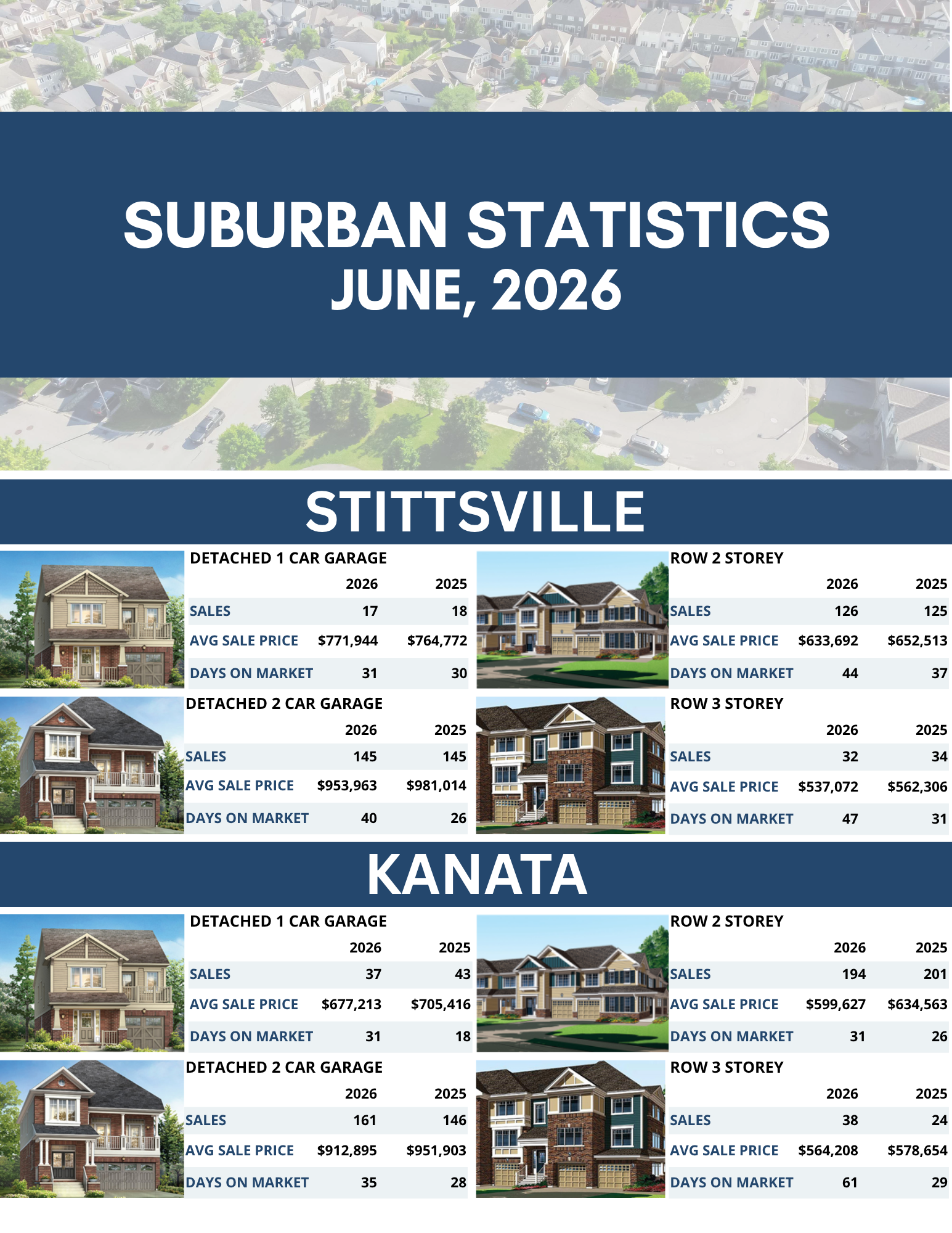
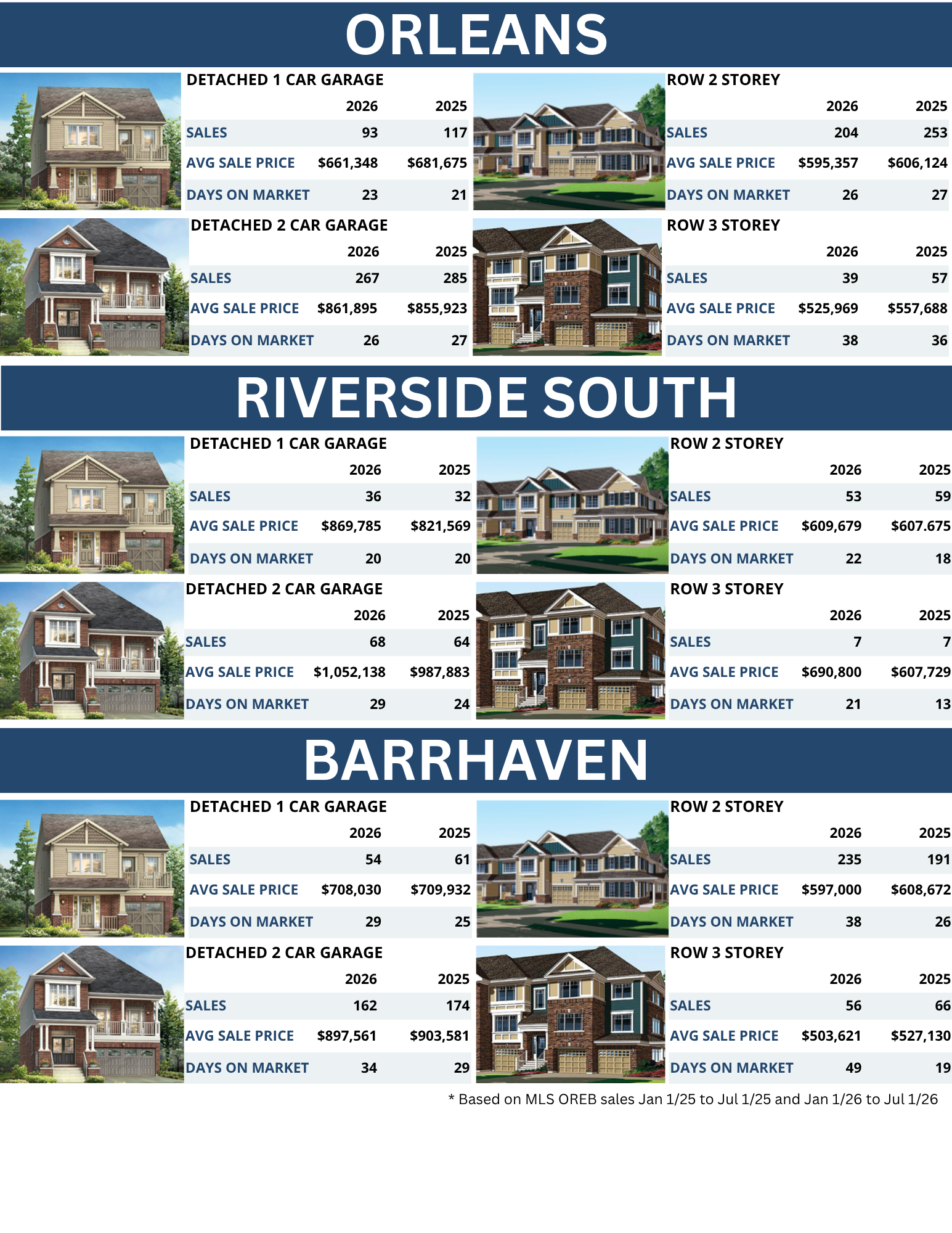
Ottawa’s real estate market is anything but uniform. In this edition of our Suburban Statistics Series, we’re examining how the city’s five largest suburban neighbourhoods are performing and where trends are emerging. The data below compares OREB MLS sales from January 1 through July 1, 2026, to the same period in 2025. It also captures the strongest year-over-year jump in sales activity we’ve seen in 2026.
Posted on: June 1st, 2026 by Chris Scott
Ottawa’s real estate market is anything but uniform. In this edition of our Suburban Statistics Series, we’re examining how the city’s five largest suburban neighbourhoods are performing and where trends are emerging. The data below compares OREB MLS sales from January 1 through June 1, 2026, to the same period in 2025. It also captures the strongest year-over-year jump in sales activity we’ve seen in 2026.
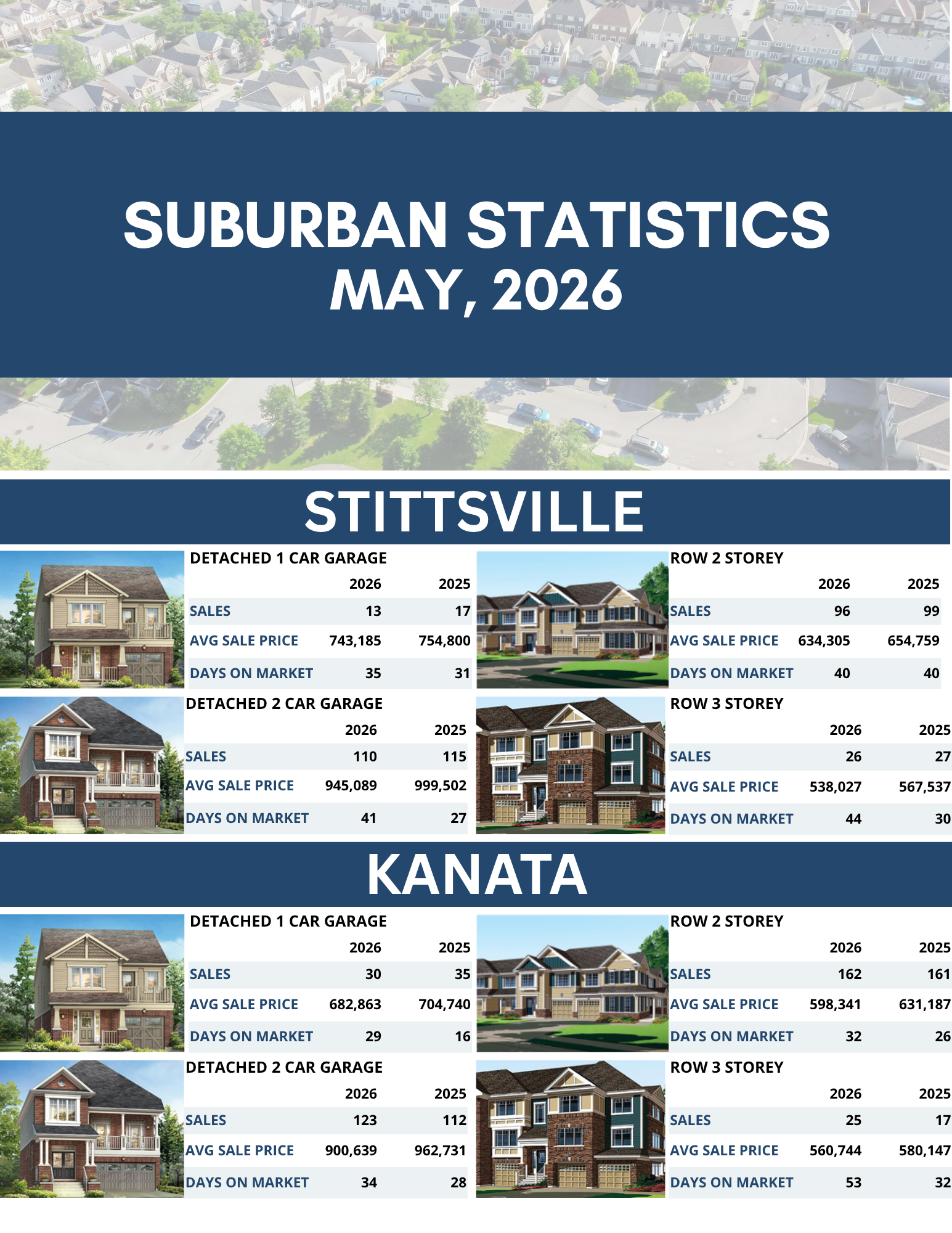
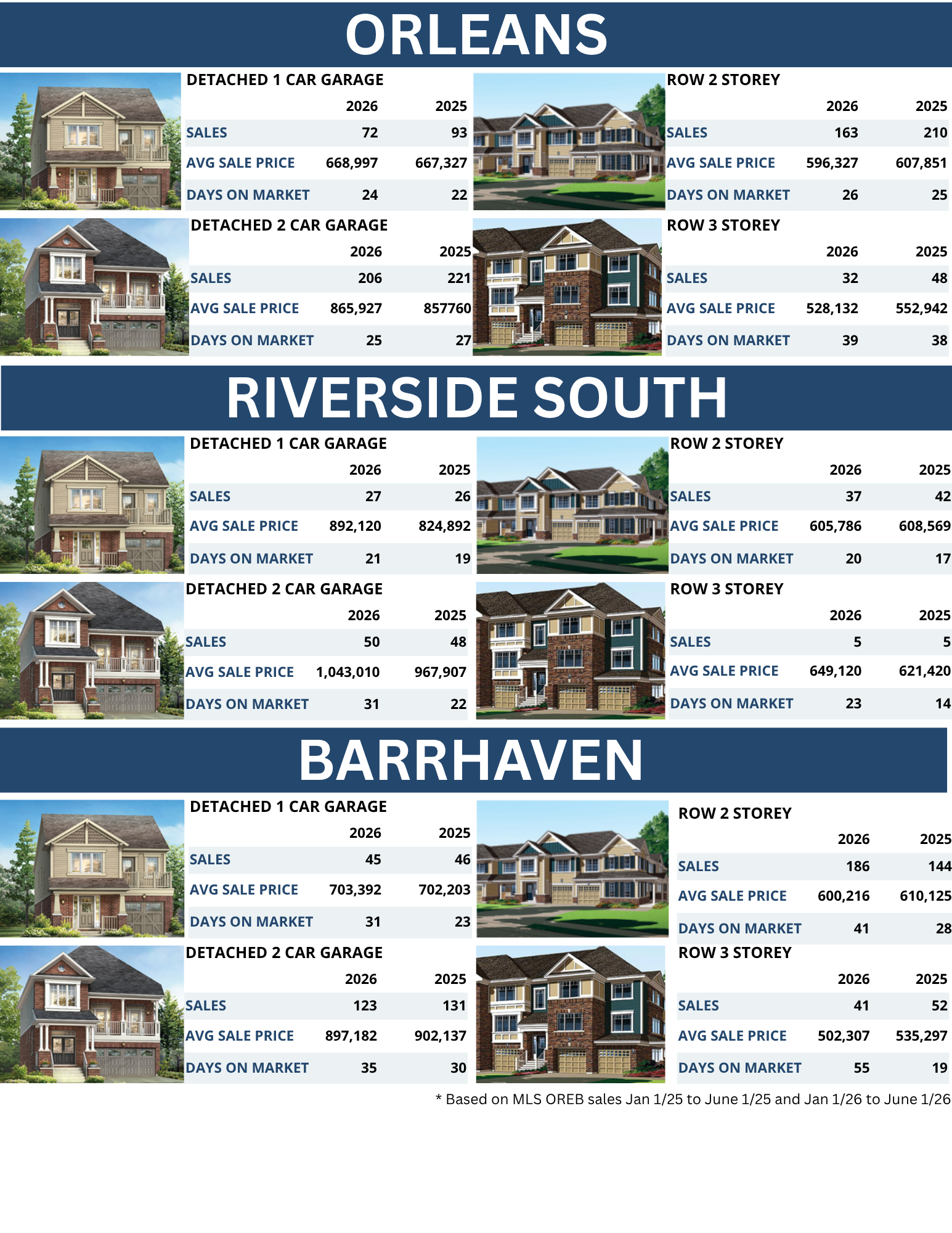
Posted on: June 1st, 2026 by Chris Scott
As part of our Suburban Statistics Series, we’re taking a closer look at Ottawa’s five largest urban neighbourhoods. With such a large and diverse city, market conditions can vary significantly from one area to another. The statistics below compare MLS sales reported through OREB between January 1 and May 1, 2026, against the same period in 2025.
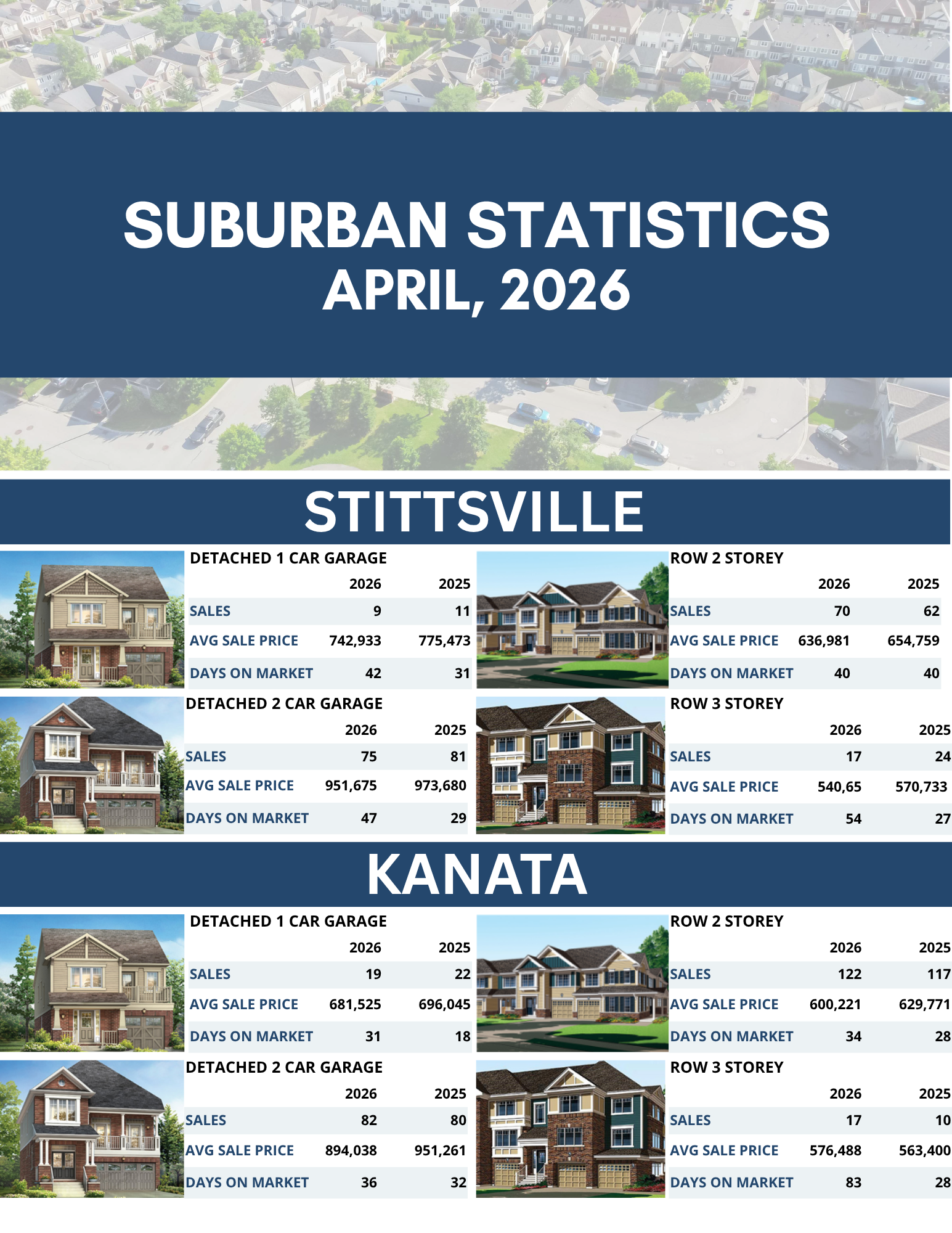
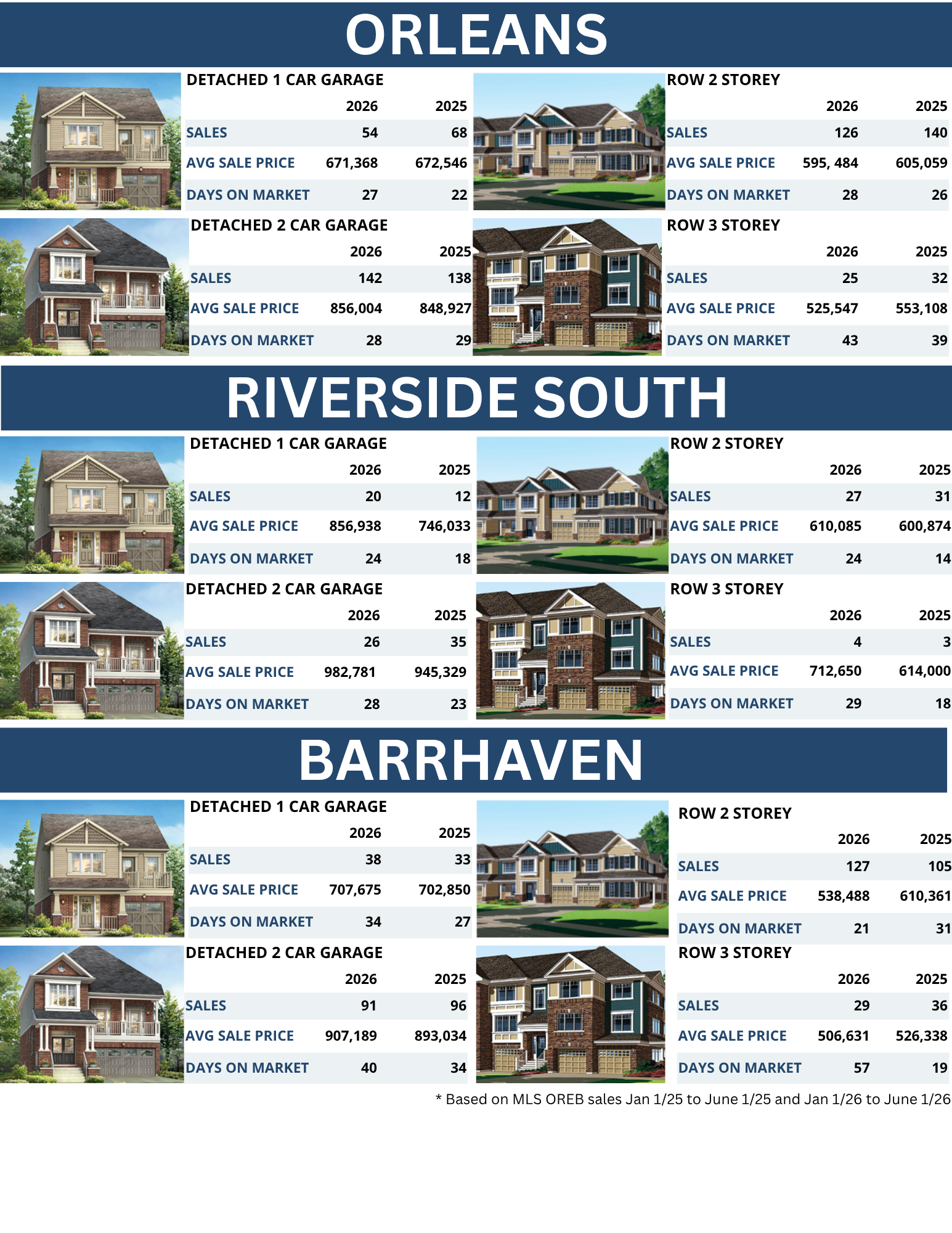
Posted on: April 14th, 2026 by Chris Scott
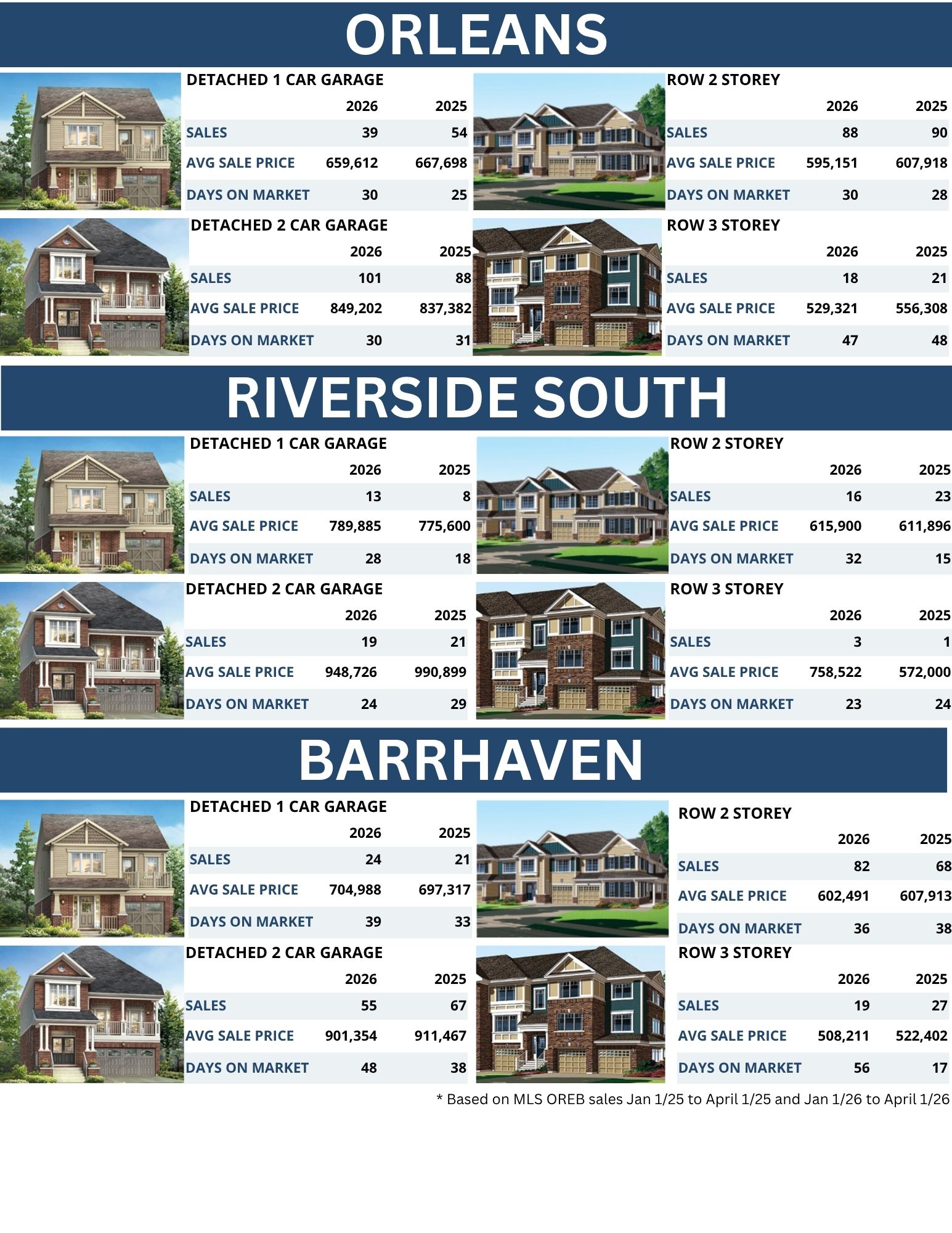
Here’s the latest update in our Suburban Statistics Series, highlighting insights from the five largest urban neighborhoods in Ottawa. Given the city’s expansive layout, it’s always interesting to see how market trends differ across each area. These statistics compare MLS OREB sales from January 1 to April 1, 2026, with the same period in 2025.

Posted on: March 27th, 2026 by Chris Scott
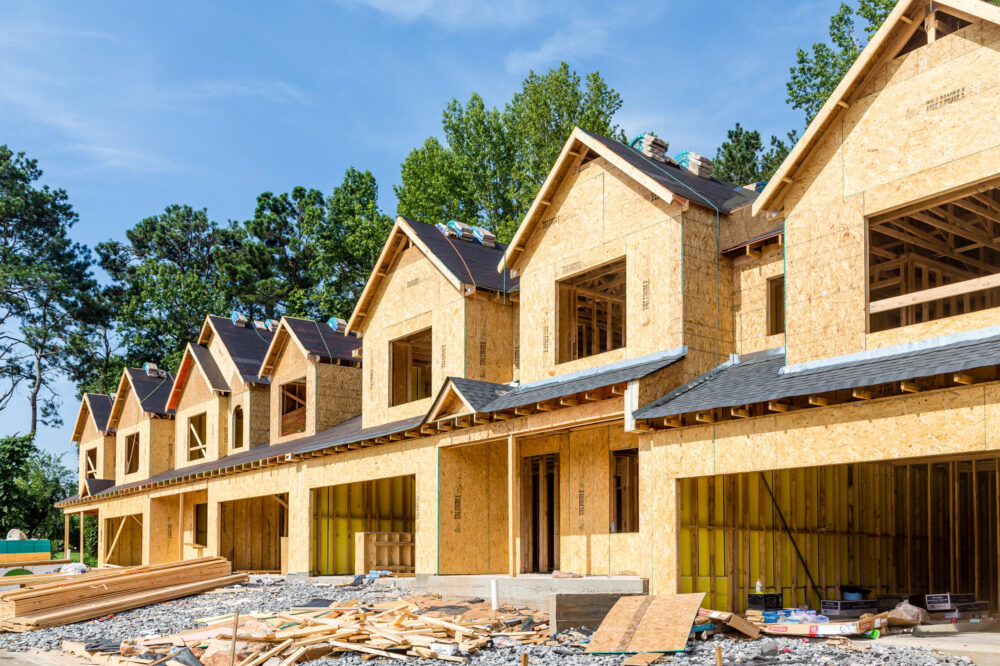
New Row House Construction with wood sheathing and asphalt roof
There’s been a big announcement this week from the Province of Ontario, and it’s one that could have a meaningful impact on buyers—especially those considering new construction.
In partnership with the federal government, Ontario is expanding the HST rebate on new homes for a limited time, with the goal of improving affordability and encouraging more housing development.
More specifically, the province is planning to temporarily remove the Harmonized Sales Tax (HST) on new homes for qualifying buyers. The full 13% tax would be eliminated on homes valued up to $1 million from April 1, 2026 to March 31, 2027.
For homes priced between $1 million and $1.5 million, buyers would still qualify for the maximum rebate of up to $130,000, with the rebate gradually decreasing for higher-priced homes—down to approximately $24,000 for homes valued at $1.85 million.
Let’s break down what this actually means.
What changed?
Under this new program, the province is temporarily expanding the rebate structure so that significantly more buyers—and a wider range of home prices—can benefit over a one-year period.
Why this matters
From a real estate perspective, this is a pretty strategic move.
New construction has been one of the biggest pressure points in Ontario’s housing supply. Between rising construction costs, interest rates, and slower buyer activity, many builders have pulled back or delayed projects.
This rebate is designed to do two things:
- Stimulate demand by lowering the effective purchase price for buyers
- Encourage builders to move forward with projects
And in a market like Ottawa—where we rely heavily on a steady pipeline of new housing—this could help bring more inventory online.
What it means for buyers
If you’re considering a new build, this is where things get interesting.
A rebate of this size can:
- Reduce your upfront cost significantly
- Improve affordability on higher price points
- Potentially allow buyers to stretch into a better product or location
That said, timing will matter. This is a temporary program, and we’ll likely see increased competition in the new construction space as buyers start to take advantage of it.
The bigger picture
This announcement is really about one thing: supply.
Governments at both levels are trying to unlock more housing by making projects more viable and encouraging buyers back into the market.
Will it solve everything? No.
But it’s a meaningful step—and one that could create opportunities for buyers who understand how to position themselves.
Final thoughts
If you’re thinking about buying a new build this year, this is worth paying close attention to.
There may be a window here where:
- Pricing is still relatively stable
- Incentives are strong
- Inventory is improving
And those three things don’t always line up.
As always, the key is understanding how this fits into your overall plan—whether that’s buying your next home, relocating, or investing.
If you want to walk through how this impacts your specific situation, happy to chat.