New Row House Construction with wood sheathing and asphalt roof
There’s been a big announcement this week from the Province of Ontario, and it’s one that could have a meaningful impact on buyers—especially those considering new construction.
In partnership with the federal government, Ontario is expanding the HST rebate on new homes for a limited time, with the goal of improving affordability and encouraging more housing development.
More specifically, the province is planning to temporarily remove the Harmonized Sales Tax (HST) on new homes for qualifying buyers. The full 13% tax would be eliminated on homes valued up to $1 million from April 1, 2026 to March 31, 2027.
For homes priced between $1 million and $1.5 million, buyers would still qualify for the maximum rebate of up to $130,000, with the rebate gradually decreasing for higher-priced homes—down to approximately $24,000 for homes valued at $1.85 million.
Let’s break down what this actually means.
What changed? Under this new program, the province is temporarily expanding the rebate structure so that significantly more buyers—and a wider range of home prices—can benefit over a one-year period.
Why this matters From a real estate perspective, this is a pretty strategic move.
New construction has been one of the biggest pressure points in Ontario’s housing supply. Between rising construction costs, interest rates, and slower buyer activity, many builders have pulled back or delayed projects.
This rebate is designed to do two things:
Stimulate demand by lowering the effective purchase price for buyers
Encourage builders to move forward with projects
And in a market like Ottawa—where we rely heavily on a steady pipeline of new housing—this could help bring more inventory online.
What it means for buyers If you’re considering a new build, this is where things get interesting.
A rebate of this size can:
Reduce your upfront cost significantly
Improve affordability on higher price points
Potentially allow buyers to stretch into a better product or location
That said, timing will matter. This is a temporary program, and we’ll likely see increased competition in the new construction space as buyers start to take advantage of it.
The bigger picture This announcement is really about one thing: supply.
Governments at both levels are trying to unlock more housing by making projects more viable and encouraging buyers back into the market.
Will it solve everything? No. But it’s a meaningful step—and one that could create opportunities for buyers who understand how to position themselves.
Final thoughts If you’re thinking about buying a new build this year, this is worth paying close attention to.
There may be a window here where:
Pricing is still relatively stable
Incentives are strong
Inventory is improving
And those three things don’t always line up.
As always, the key is understanding how this fits into your overall plan—whether that’s buying your next home, relocating, or investing.
If you want to walk through how this impacts your specific situation, happy to chat.
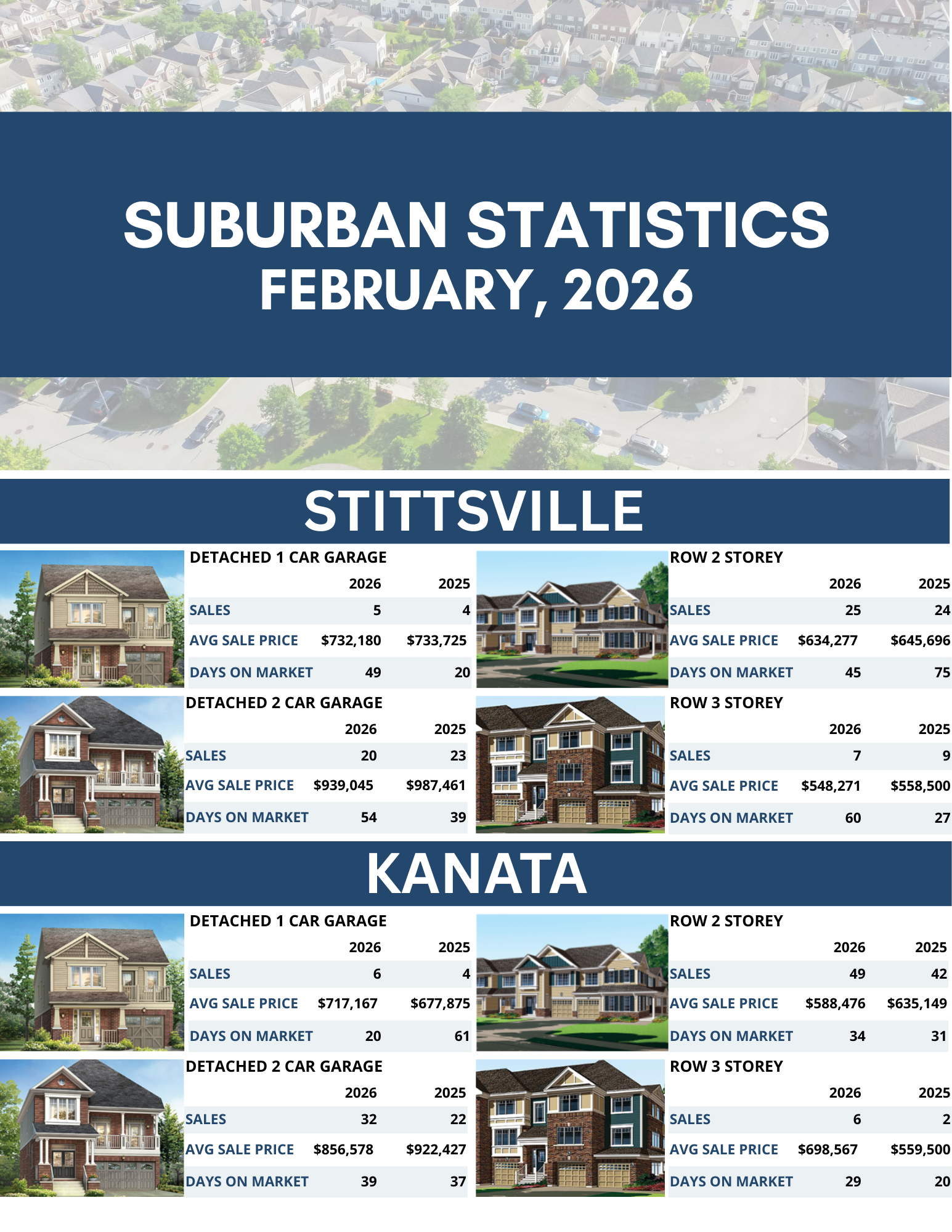
Here’s the latest update in our Suburban Statistics Series, featuring insights on the five largest urban neighborhoods in Ottawa. With Ottawa’s spread-out layout, it’s always fascinating to see how each area’s market trends vary. These stats compare MLS OREB sales from January 1 to February 28, 2026, with the same period in 2025.
On this episode of The Chris Scott Show, Colin and I talked about something that really matters right now for anyone thinking about selling: how to actually stand out in a market with more inventory and more choice than we’ve seen in a while.
The reality is simple. There are a lot of listings out there. Buyers have options. And that means sellers need an edge.
For us, it starts with being real. We spend a lot of time having honest conversations with sellers about pricing, timing, and expectations. That’s not always the easiest approach, and it doesn’t always win us the listing, but it’s the right one. Telling someone what they want to hear might feel good in the moment, but it doesn’t help them sell their home. Price is driven by what buyers are willing to pay, not by headlines or hype, and there’s a lot of data behind how we land on our numbers.
Once pricing is right, preparation becomes everything. Deferred maintenance matters more than ever. Small things add up. Paint touch-ups, minor repairs, misaligned cabinet doors, anything that gives buyers a reason to mentally start building a repair list should be addressed upfront. Buyers will always make a list, but in today’s market, they can use that list to negotiate harder.
One strategy we’re seeing work well is getting a home inspection done before listing, especially in older neighbourhoods. Issues that might cost a seller $1,000 or $2,000 to fix ahead of time can easily turn into a $5,000 price reduction once a buyer’s inspection happens. Handling those items in advance gives sellers more control and fewer surprises.
We’ve also seen firsthand what happens when preparation is ignored. Homes that sit for months, come off the market, get staged and painted, then go back on at the same price and sell. Price wasn’t the issue. Presentation was. Doing it right the first time saves months of stress, showings, and second-guessing.
First impressions are everything. Buyers are seeing so many homes that it doesn’t take long for them to decide whether something feels right or not. It could be the layout, a smell, a visual distraction, or just a general lack of polish. You might not know in nine seconds that it’s “the one,” but you can definitely know in nine seconds that it isn’t.
From our side, more inventory means we have to up our game too. Better marketing, better content, better storytelling. Video is no longer optional. Buyers are going to watch it at some point, whether it’s before a showing, after, or when they’re sharing the home with family. That’s our chance to highlight features they might have missed and help them connect emotionally with the home.
We meet buyers where they are. Full property videos, Instagram-specific content, VR tours, whatever format they prefer. Different styles, same goal: helping buyers see themselves living there.
At the end of the day, selling a home is emotional. Buyers don’t just buy square footage, they buy how a place makes them feel. When pricing, preparation, and marketing all line up, that’s when sellers truly get the edge.
If you have questions about selling in today’s market or want to talk through what this could look like for your home, reach out anytime. And if you’re enjoying the podcast, let us know what you think of the format and the conversations we’re having.
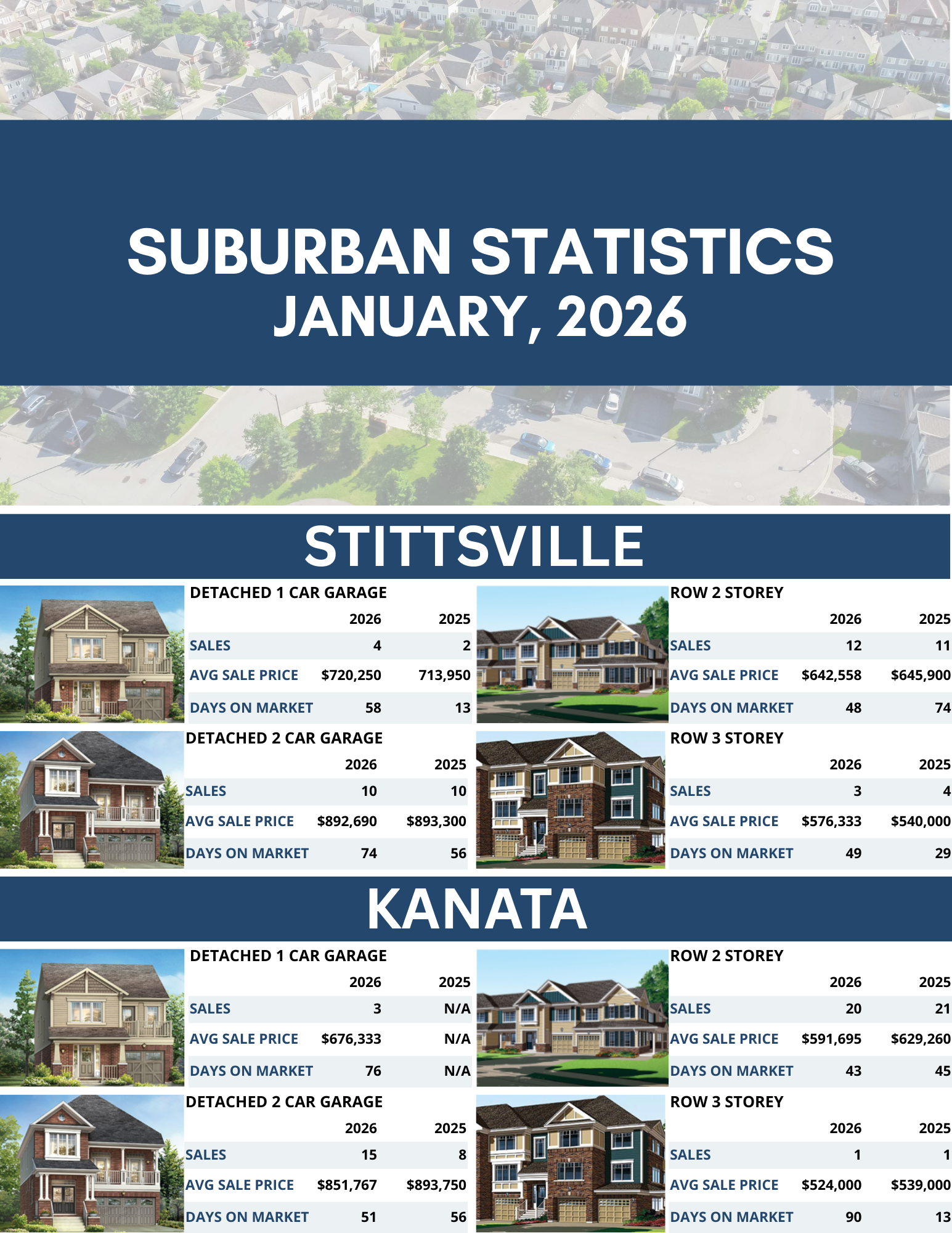
Here’s the latest update in our Suburban Statistics Series, featuring insights on the five largest urban neighborhoods in Ottawa. With Ottawa’s spread-out layout, it’s always fascinating to see how each area’s market trends vary. These stats compare MLS OREB sales from January 1 to January 31, 2026, with the same period in 2025.
The Canadian Real Estate Association’s January 2026 Housing Update gives us a helpful snapshot of where the housing market is heading both nationally and here in Ottawa. While headlines often lean toward uncertainty, the data itself tells a more balanced story. For buyers, sellers, and anyone planning a move this year, there’s a lot of useful context in this update if you know where to look
——————————————————————————————————————————-
Interest Rates: Stability, Not Sharp Relief
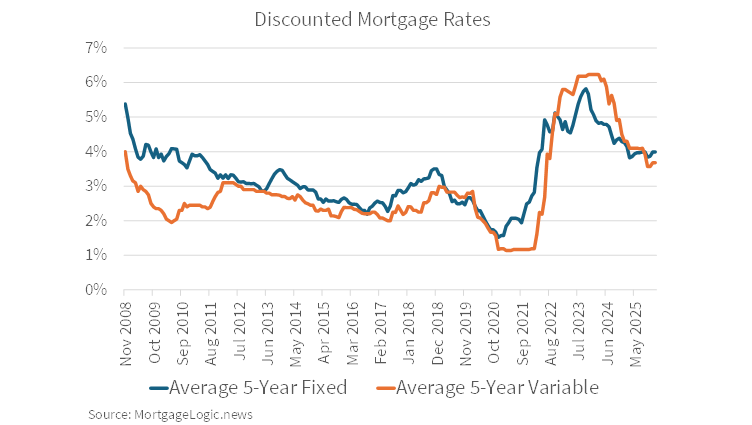
One of the biggest questions I hear right now is about interest rates — and whether meaningful relief is coming. According to CREA’s January 2026 Housing Update, the Bank of Canada believes the current policy rate is “about the right level” to keep inflation close to its 2% target while supporting the economy through this period of adjustment (Figure 1)
Figure 1: Bank of Canada signalling rate stability rather than aggressive cuts (CREA Housing Update, Jan 2026).
What this really tells us is that we shouldn’t expect sudden or dramatic rate drops. Any improvement in affordability is more likely to come gradually. For buyers, that means planning around today’s reality rather than waiting for a big shift. For sellers, it reinforces the importance of pricing properly in a market that’s steady, but far less forgiving of overpricing.
——————————————————————————————————————————-
Demand Isn’t Going Away
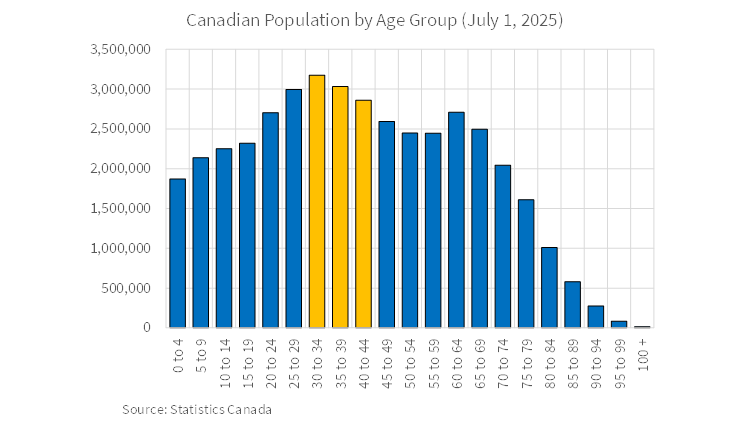
Even with affordability challenges, the desire to own a home hasn’t gone anywhere. CREA’s presentation highlights that 75% of non-homeowners aged 30–44 still plan to buy one day, and that number jumps to 86% among those aged 18–29 (Figure 2).
Figure 2: Long-term homeownership intentions by age group, sourced from Abacus Data and presented in CREA’s January 2026 Housing Update.
This lines up closely with what we’re seeing on the ground in Ottawa. Many buyers aren’t out of the market — they’re simply waiting. Timing, financing, and life stage all play a role. The key takeaway here is that underlying demand is still very much intact.
——————————————————————————————————————————-
The “Missing Middle” and Ottawa’s Supply Challenge
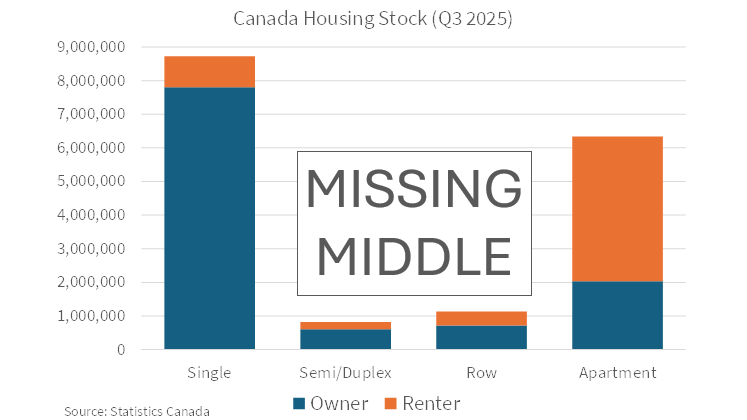
Another major theme in the CREA update is the ongoing shortage of “missing middle” housing — things like townhomes, duplexes, and smaller multi-unit properties. These are often the most practical options for first-time buyers, growing families, and downsizers. Unfortunately, they’re also in short supply, especially in Ottawa (Figure 3).
Figure 3: Housing stock by dwelling type highlighting the “missing middle” (CREA Housing Update, Jan 2026).
This supply gap helps explain why certain segments of Ottawa’s market remain competitive, even when overall sales activity slows. When demand consistently outweighs supply in these categories, prices tend to stay firm.
——————————————————————————————————————————-
Public Service Employment and Local Confidence
CREA also points to federal budget projections showing 16,000 job reductions over three years and 41,000 over five years, starting in 2024. Importantly, many of these reductions are happening quietly through retirements and attrition rather than sudden layoffs.
For Ottawa, that distinction matters. Gradual workforce changes typically have a much softer impact on housing demand than abrupt job losses. It’s one of the reasons our local market has remained relatively stable compared to other parts of the country.
——————————————————————————————————————————-
Ottawa’s Market: Resilient, But Selective
When you look specifically at Ottawa’s new residential construction and resale activity, the picture that emerges is a market that’s functioning well — just more selective. Homes that are well priced and in desirable neighbourhoods are still selling. Properties that miss the mark on price, condition, or presentation are taking longer.
This isn’t a market driven by panic or hype. It’s one that rewards preparation, good advice, and a clear understanding of local conditions.
——————————————————————————————————————————-
Final Thoughts
CREA’s January 2026 update reinforces what many Ottawa buyers and sellers are already feeling. Demand hasn’t disappeared. Interest rates are relatively stable. Supply challenges are still very real. And while uncertainty exists, Ottawa’s housing market continues to operate with balance and resilience.
As always, the most important piece is understanding how these broader trends apply to your situation. That’s where strategy, timing, and local insight really matter.
Sources
Canadian Real Estate Association (CREA), Housing Update Presentation, January 16, 2026. Data and charts referenced from CREA presentation slides, including Bank of Canada policy commentary and Abacus Data on homeownership demand.
One of the main reasons I wanted to start The Chris Scott Show was simple: I always felt like I had more to say. Our monthly market videos are great, but Ottawa real estate isn’t something you can properly explain in 60 seconds. There’s context, nuance, and a lot happening under the surface.
For the first episode, I sat down with Colin Raines, my longtime partner. We talked through what we’ve been seeing day to day with buyers and sellers and how the past year has really set the stage for what’s ahead.
Looking back on 2025, it wasn’t a bad year, but it was definitely an uncertain one. Between political shifts, trade talk, and a late winter, a lot of people hesitated early on. If you didn’t have to move, many people chose to wait. That said, Ottawa once again showed how resilient it is. Being a government and military town matters. People still needed to buy and sell for renewals, relocations, and life changes.
Even in a year that felt slower, our team had our best year ever. After 20 years in this business, that’s something I’m really proud of. It’s a good reminder that while headlines can sound alarming, the fundamentals of the Ottawa real estate market remain solid.
One of the biggest topics we discussed was mortgage renewals. A large number of homeowners bought in 2021 when prices surged and rates were incredibly low. Now those mortgages are coming up for renewal, and in some cases payments will be significantly higher. That doesn’t mean a crash is coming, but it does mean some households will feel pressure, and a portion may decide—or need—to sell.
Looking ahead to 2026, the biggest local factor is public service employment. Even the possibility of job cuts can slow buyer confidence. When people feel uncertain about their jobs, they tend to pause major decisions. Interest rates will matter too, but likely in a more modest way. Small cuts could help affordability, but they won’t fundamentally change the market on their own.
Inventory is where things really diverge. Single-family homes are sitting in a fairly balanced range. Townhomes are surprisingly tight. Condos remain the toughest segment, with higher inventory and more competition. This is why the market can feel very different depending on what type of home you’re buying or selling.
For buyers, this is a far more reasonable market than a few years ago. There’s more choice, less pressure, and more room to be strategic. Good homes are still selling—sometimes with multiple offers—but buyers no longer need to overreach to compete.
For sellers, preparation matters more than ever. Pricing correctly, presenting the home well, and creating a bit of a wow factor can make all the difference. Homes that stand out are moving; homes that don’t can sit longer. Patience is part of the process right now.
What stood out most from last year were the client wins—helping military families relocate smoothly, negotiating strong value for buyers, and taking listings that hadn’t sold before and getting them across the finish line. Those messages months later saying, “We’re so happy here,” are what make this work worthwhile.
If you listened to the episode, I’d love to hear your thoughts. Let us know what you think of this interview-style conversation about the current Ottawa real estate market, and whether this kind of deeper discussion is something you’d like to hear more of.
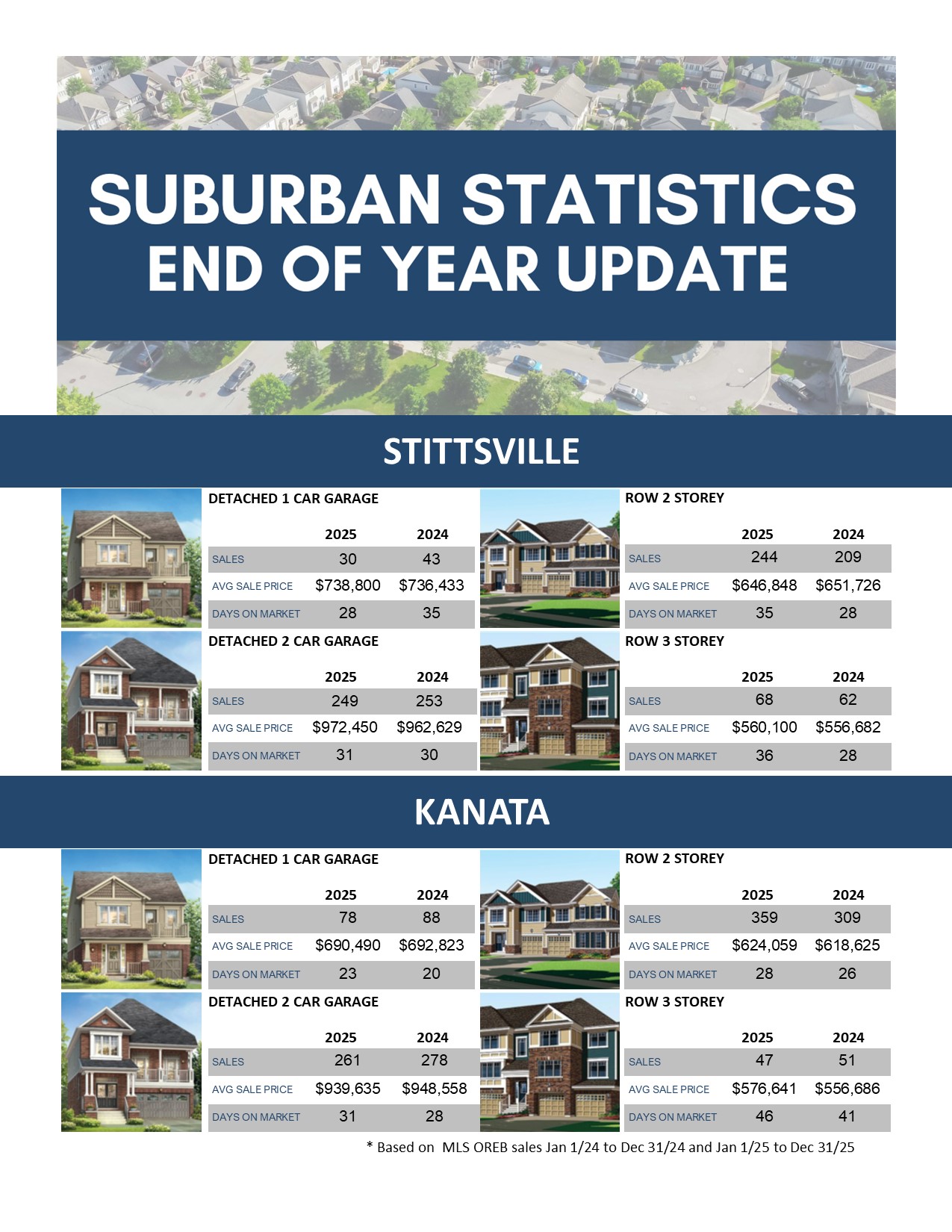
Here’s the latest update in our Suburban Statistics Series, featuring insights on the five largest urban neighborhoods in Ottawa. With Ottawa’s spread-out layout, it’s always fascinating to see how each area’s market trends vary. These stats compare MLS OREB sales from January 1 to December 31, 2025, with the same period in 2024.
Selling a home is never a small task, and doing it while deployed overseas adds an entirely different layer. We recently helped one of our military clients sell her condo on Pinhey Street while she was serving abroad, and it’s a great example of how the right systems, preparation, and experience can make distance a non-issue.
From the start, communication was key. With time zone differences and a busy deployment schedule, we handled everything through WhatsApp, keeping things simple and efficient. Offers, updates, questions, and documents were all managed in real time, allowing our client to stay fully in the loop without added stress. The entire process felt easy and seamless, even though she was thousands of miles away.
Although the condo was vacant while she was away, we brought in professional staging to present it at its best and help buyers visualize the lifestyle it offers. We also used professional photography to highlight the layout, natural light, and finishes, allowing the listing to truly stand out among other condos on the market.
While prioritizing both marketing and communication, we worked closely with Brookfield Relocations to ensure timelines, details, and expectations were aligned throughout the transaction. Through proactive coordination and strong relationships behind the scenes, we were able to prevent surprises and keep the process running smoothly.
Working with clients overseas is something our team does regularly. As a military real estate specialist, we understand deployments, relocations, tight schedules, and the need for clear, direct communication. Our job is to take as much off our clients’ plates as possible so they can focus on their service, knowing their condo sale is being handled properly.
The successful sale of the Pinhey Street condo is a great reminder that with the right team — and the right presentation — selling from anywhere in the world is absolutely possible. As a Top Ottawa Realtor, we’re proud to support those who serve and make the process as smooth and stress-free as it should be, no matter where duty calls.
Hey everyone, Chris here with a quick update on the Ottawa real estate market! The past few weeks have been eventful, with interest rates dropping, including a significant half-point cut by the Bank of Canada. This shift is already impacting the market—buyers are coming back, multiple offers are returning, and momentum is building.
Here’s what I’m seeing:
Buyer activity is picking up as affordability improves.
Low inventory remains a challenge, with fewer new builds and limited resale options.
Market predictions: A potential shift to a seller’s market in early 2024, with home prices projected to rise by 5-6%.
Every neighborhood is different, so if you’re curious about what’s happening in your area, reach out to my team. Let’s chat about how these changes might impact your real estate goals.