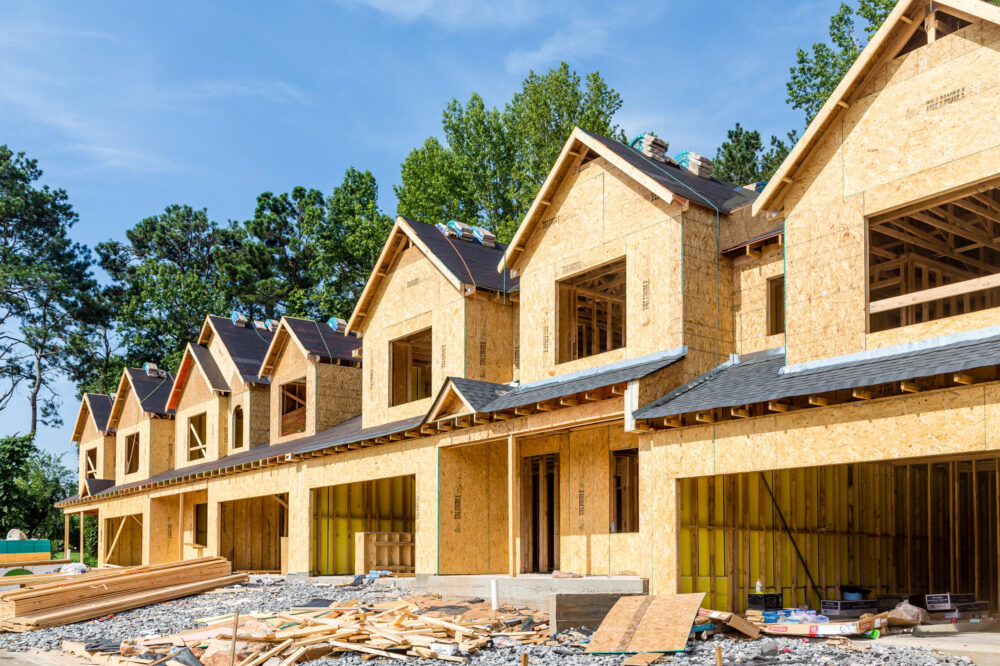
New Row House Construction with wood sheathing and asphalt roof
There’s been a big announcement this week from the Province of Ontario, and it’s one that could have a meaningful impact on buyers—especially those considering new construction.
In partnership with the federal government, Ontario is expanding the HST rebate on new homes for a limited time, with the goal of improving affordability and encouraging more housing development.
More specifically, the province is planning to temporarily remove the Harmonized Sales Tax (HST) on new homes for qualifying buyers. The full 13% tax would be eliminated on homes valued up to $1 million from April 1, 2026 to March 31, 2027.
For homes priced between $1 million and $1.5 million, buyers would still qualify for the maximum rebate of up to $130,000, with the rebate gradually decreasing for higher-priced homes—down to approximately $24,000 for homes valued at $1.85 million.
Let’s break down what this actually means.
What changed? Under this new program, the province is temporarily expanding the rebate structure so that significantly more buyers—and a wider range of home prices—can benefit over a one-year period.
Why this matters From a real estate perspective, this is a pretty strategic move.
New construction has been one of the biggest pressure points in Ontario’s housing supply. Between rising construction costs, interest rates, and slower buyer activity, many builders have pulled back or delayed projects.
This rebate is designed to do two things:
Stimulate demand by lowering the effective purchase price for buyers
Encourage builders to move forward with projects
And in a market like Ottawa—where we rely heavily on a steady pipeline of new housing—this could help bring more inventory online.
What it means for buyers If you’re considering a new build, this is where things get interesting.
A rebate of this size can:
Reduce your upfront cost significantly
Improve affordability on higher price points
Potentially allow buyers to stretch into a better product or location
That said, timing will matter. This is a temporary program, and we’ll likely see increased competition in the new construction space as buyers start to take advantage of it.
The bigger picture This announcement is really about one thing: supply.
Governments at both levels are trying to unlock more housing by making projects more viable and encouraging buyers back into the market.
Will it solve everything? No. But it’s a meaningful step—and one that could create opportunities for buyers who understand how to position themselves.
Final thoughts If you’re thinking about buying a new build this year, this is worth paying close attention to.
There may be a window here where:
Pricing is still relatively stable
Incentives are strong
Inventory is improving
And those three things don’t always line up.
As always, the key is understanding how this fits into your overall plan—whether that’s buying your next home, relocating, or investing.
If you want to walk through how this impacts your specific situation, happy to chat.
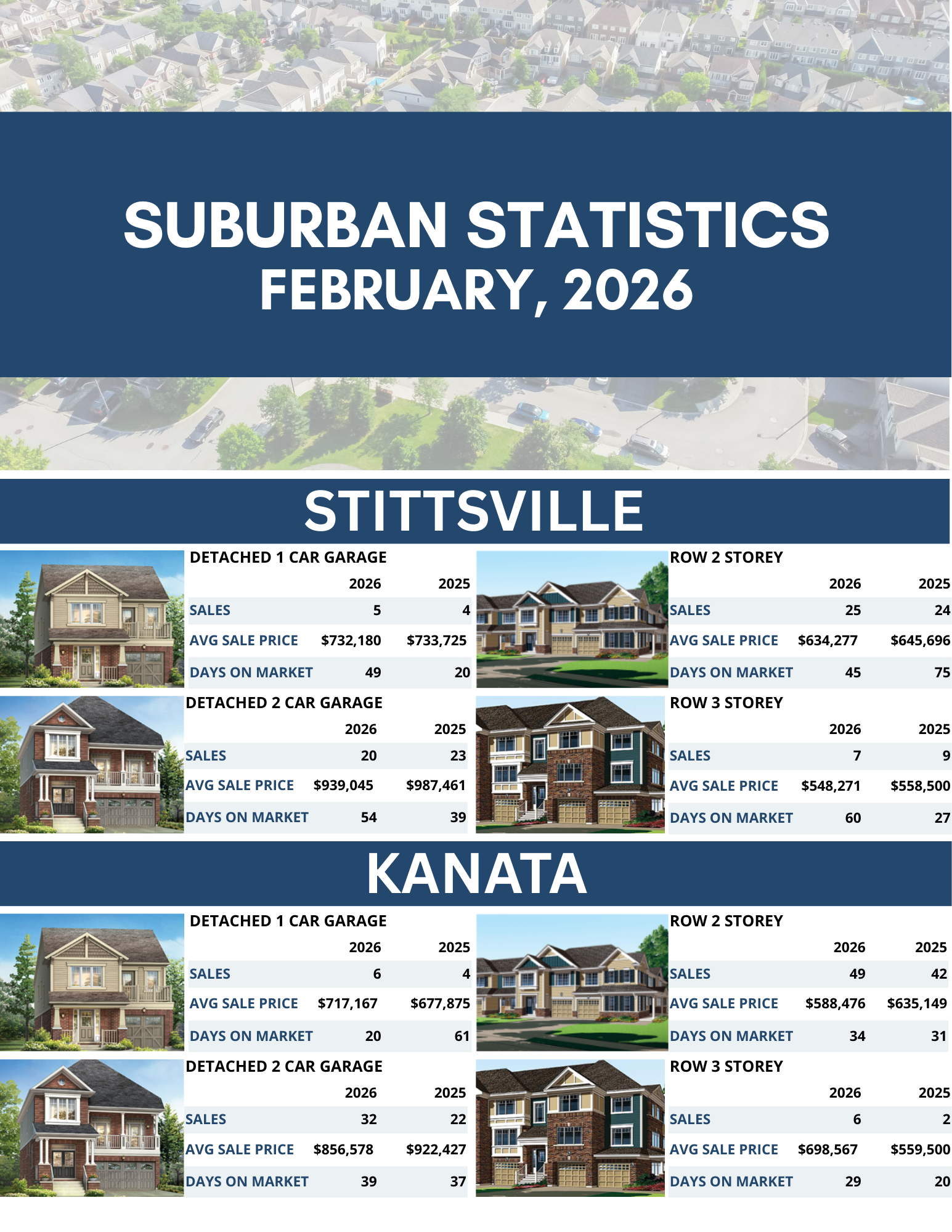
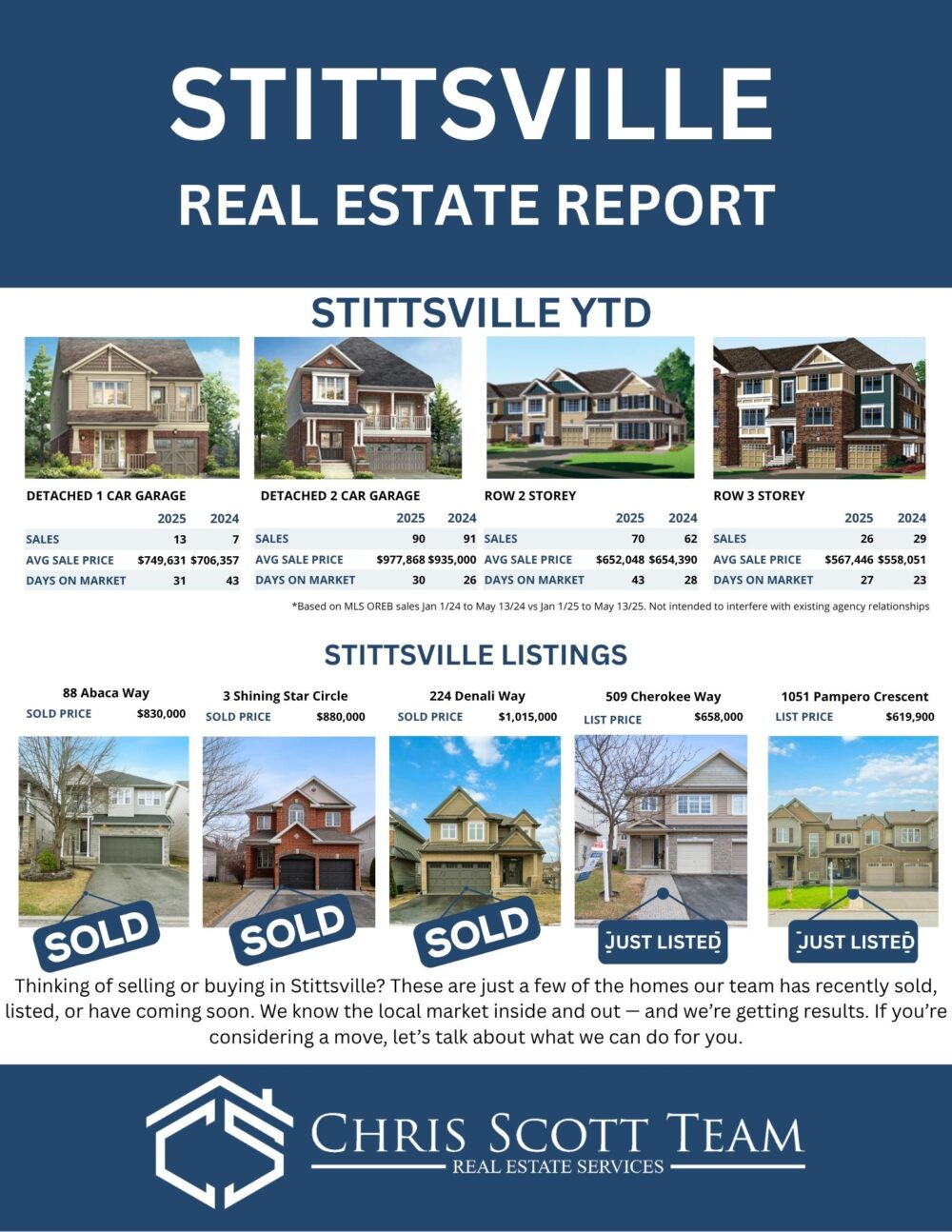
Here’s the latest update in our Suburban Statistics Series, featuring insights on the five largest urban neighborhoods in Ottawa. With Ottawa’s spread-out layout, it’s always fascinating to see how each area’s market trends vary. These stats compare MLS OREB sales from January 1 to February 28, 2026, with the same period in 2025.
On this episode of The Chris Scott Show, Colin and I talked about something that really matters right now for anyone thinking about selling: how to actually stand out in a market with more inventory and more choice than we’ve seen in a while.
The reality is simple. There are a lot of listings out there. Buyers have options. And that means sellers need an edge.
For us, it starts with being real. We spend a lot of time having honest conversations with sellers about pricing, timing, and expectations. That’s not always the easiest approach, and it doesn’t always win us the listing, but it’s the right one. Telling someone what they want to hear might feel good in the moment, but it doesn’t help them sell their home. Price is driven by what buyers are willing to pay, not by headlines or hype, and there’s a lot of data behind how we land on our numbers.
Once pricing is right, preparation becomes everything. Deferred maintenance matters more than ever. Small things add up. Paint touch-ups, minor repairs, misaligned cabinet doors, anything that gives buyers a reason to mentally start building a repair list should be addressed upfront. Buyers will always make a list, but in today’s market, they can use that list to negotiate harder.
One strategy we’re seeing work well is getting a home inspection done before listing, especially in older neighbourhoods. Issues that might cost a seller $1,000 or $2,000 to fix ahead of time can easily turn into a $5,000 price reduction once a buyer’s inspection happens. Handling those items in advance gives sellers more control and fewer surprises.
We’ve also seen firsthand what happens when preparation is ignored. Homes that sit for months, come off the market, get staged and painted, then go back on at the same price and sell. Price wasn’t the issue. Presentation was. Doing it right the first time saves months of stress, showings, and second-guessing.
First impressions are everything. Buyers are seeing so many homes that it doesn’t take long for them to decide whether something feels right or not. It could be the layout, a smell, a visual distraction, or just a general lack of polish. You might not know in nine seconds that it’s “the one,” but you can definitely know in nine seconds that it isn’t.
From our side, more inventory means we have to up our game too. Better marketing, better content, better storytelling. Video is no longer optional. Buyers are going to watch it at some point, whether it’s before a showing, after, or when they’re sharing the home with family. That’s our chance to highlight features they might have missed and help them connect emotionally with the home.
We meet buyers where they are. Full property videos, Instagram-specific content, VR tours, whatever format they prefer. Different styles, same goal: helping buyers see themselves living there.
At the end of the day, selling a home is emotional. Buyers don’t just buy square footage, they buy how a place makes them feel. When pricing, preparation, and marketing all line up, that’s when sellers truly get the edge.
If you have questions about selling in today’s market or want to talk through what this could look like for your home, reach out anytime. And if you’re enjoying the podcast, let us know what you think of the format and the conversations we’re having.
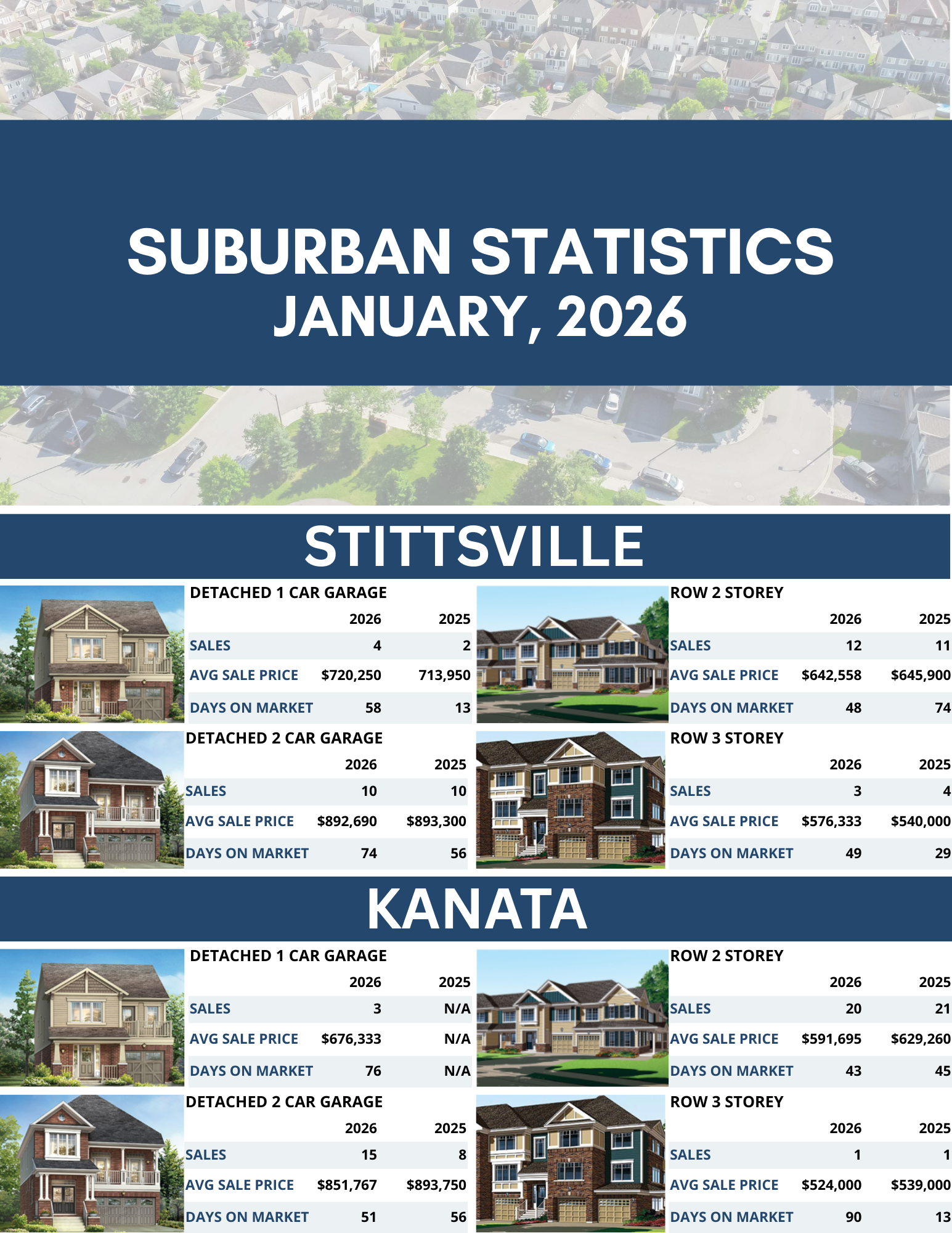
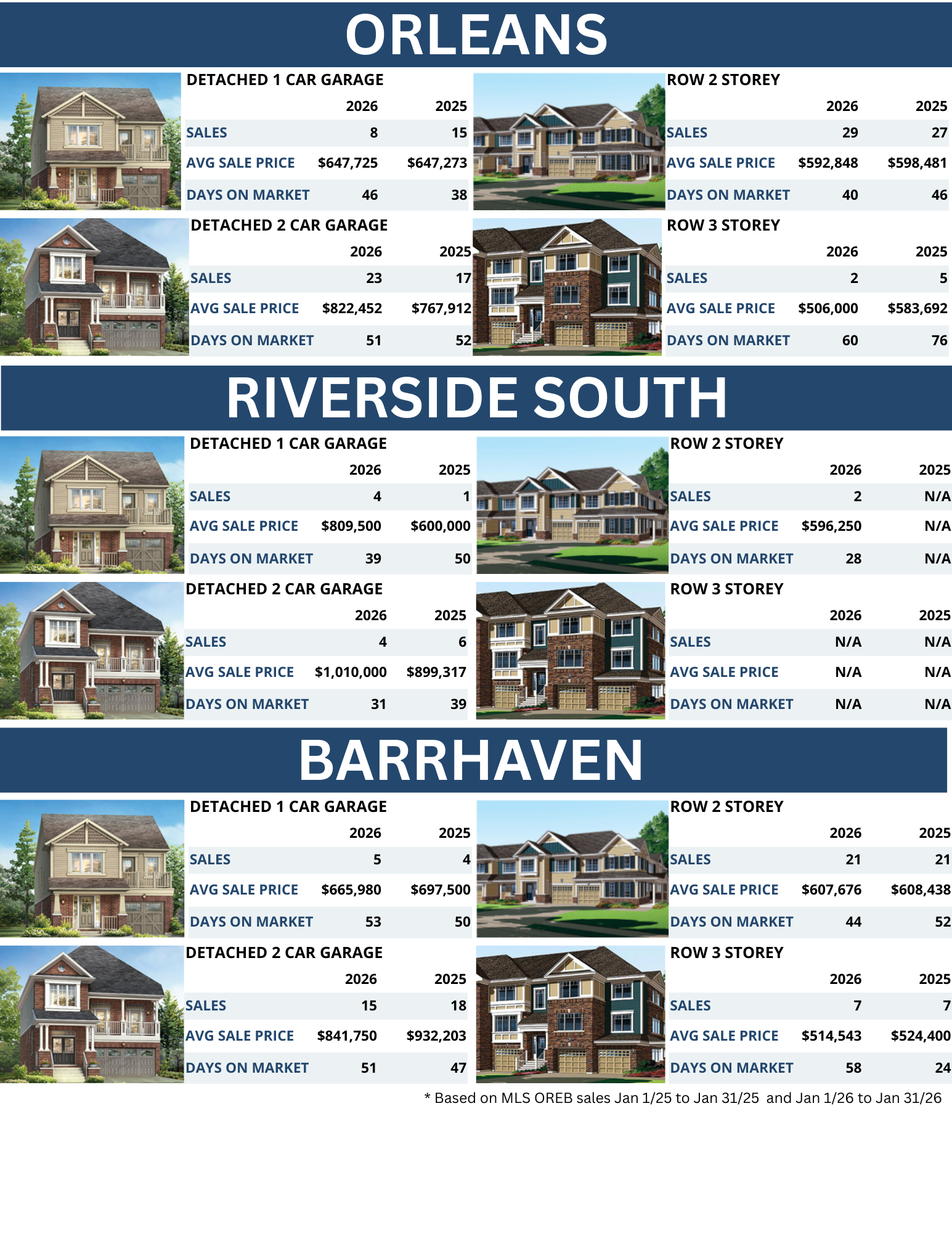
Here’s the latest update in our Suburban Statistics Series, featuring insights on the five largest urban neighborhoods in Ottawa. With Ottawa’s spread-out layout, it’s always fascinating to see how each area’s market trends vary. These stats compare MLS OREB sales from January 1 to January 31, 2026, with the same period in 2025.
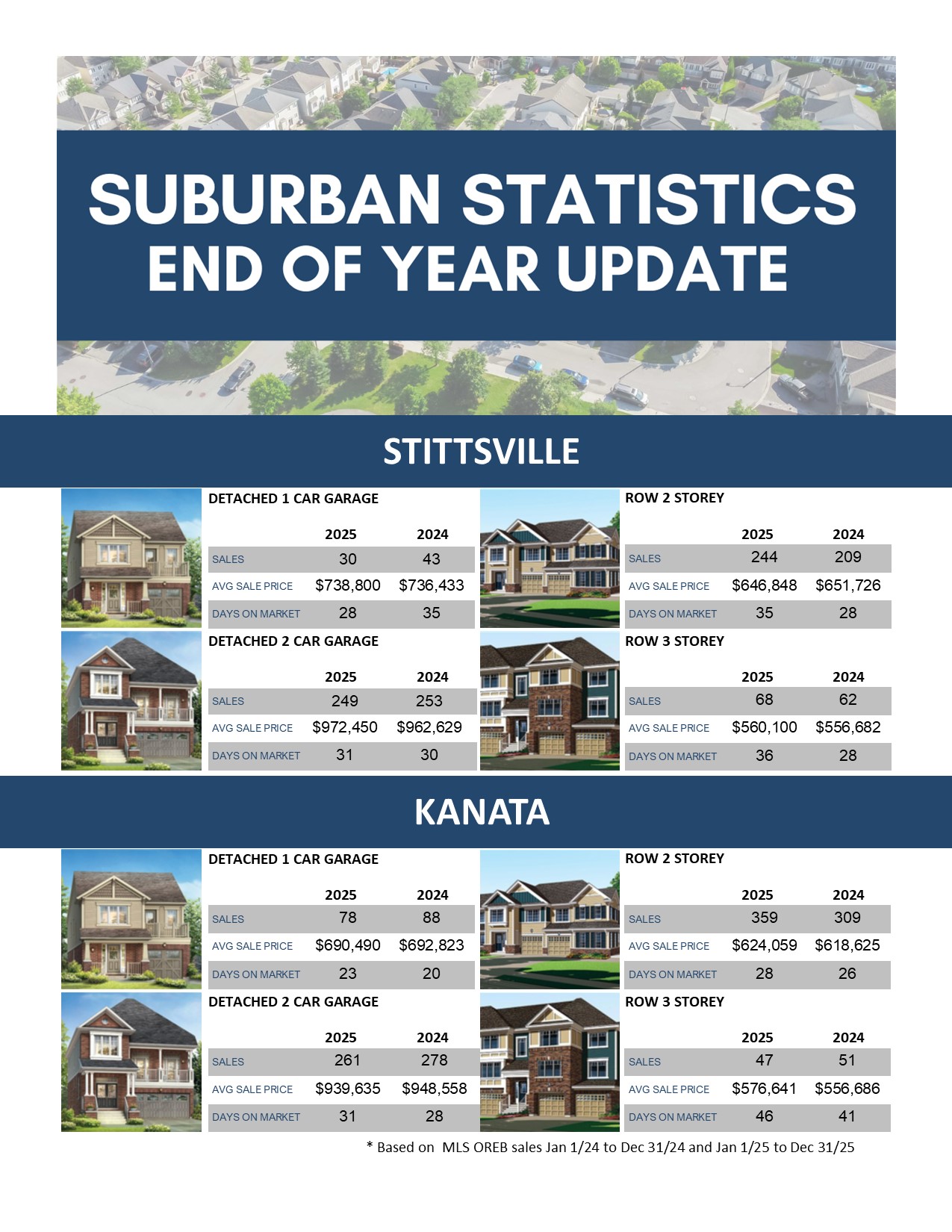
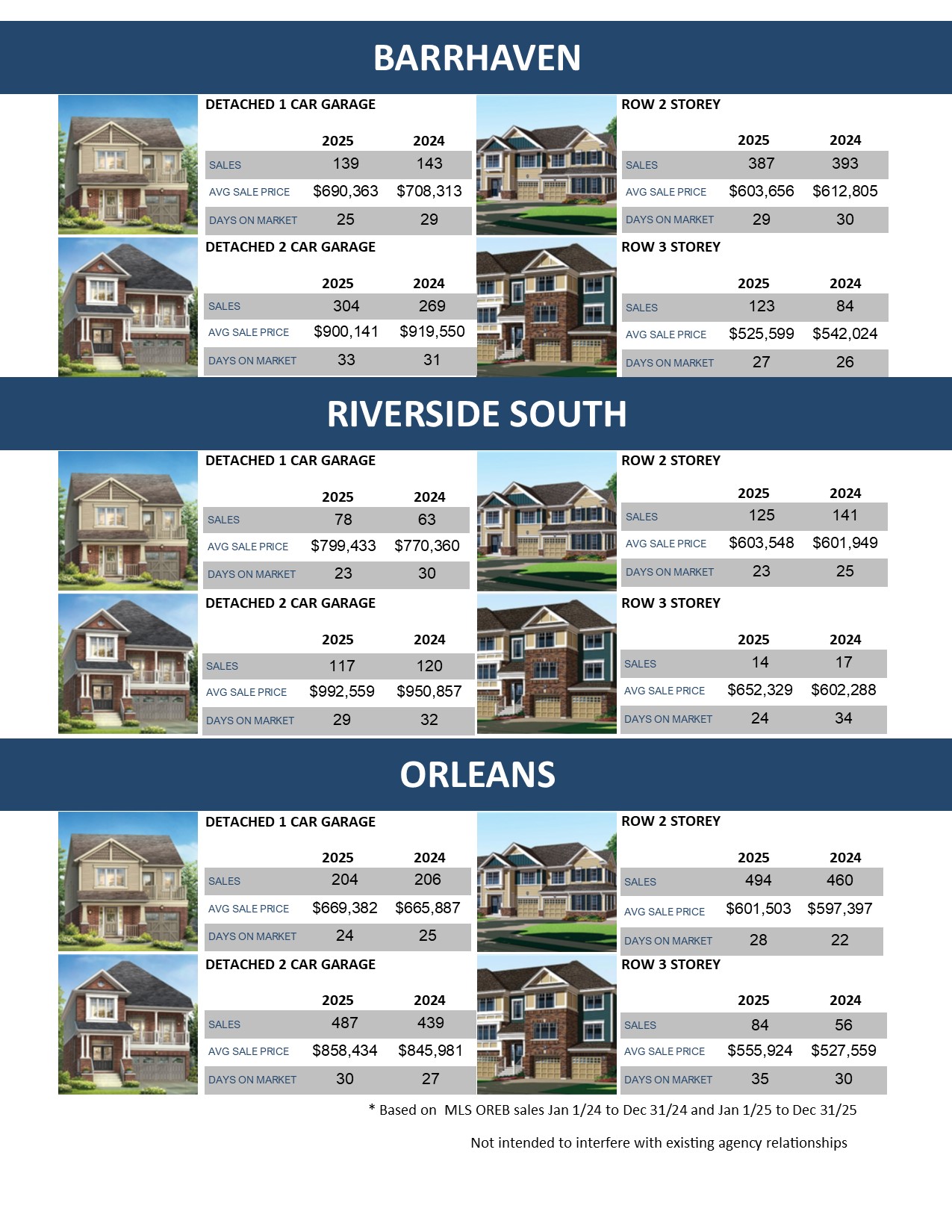
Here’s the latest update in our Suburban Statistics Series, featuring insights on the five largest urban neighborhoods in Ottawa. With Ottawa’s spread-out layout, it’s always fascinating to see how each area’s market trends vary. These stats compare MLS OREB sales from January 1 to December 31, 2025, with the same period in 2024.
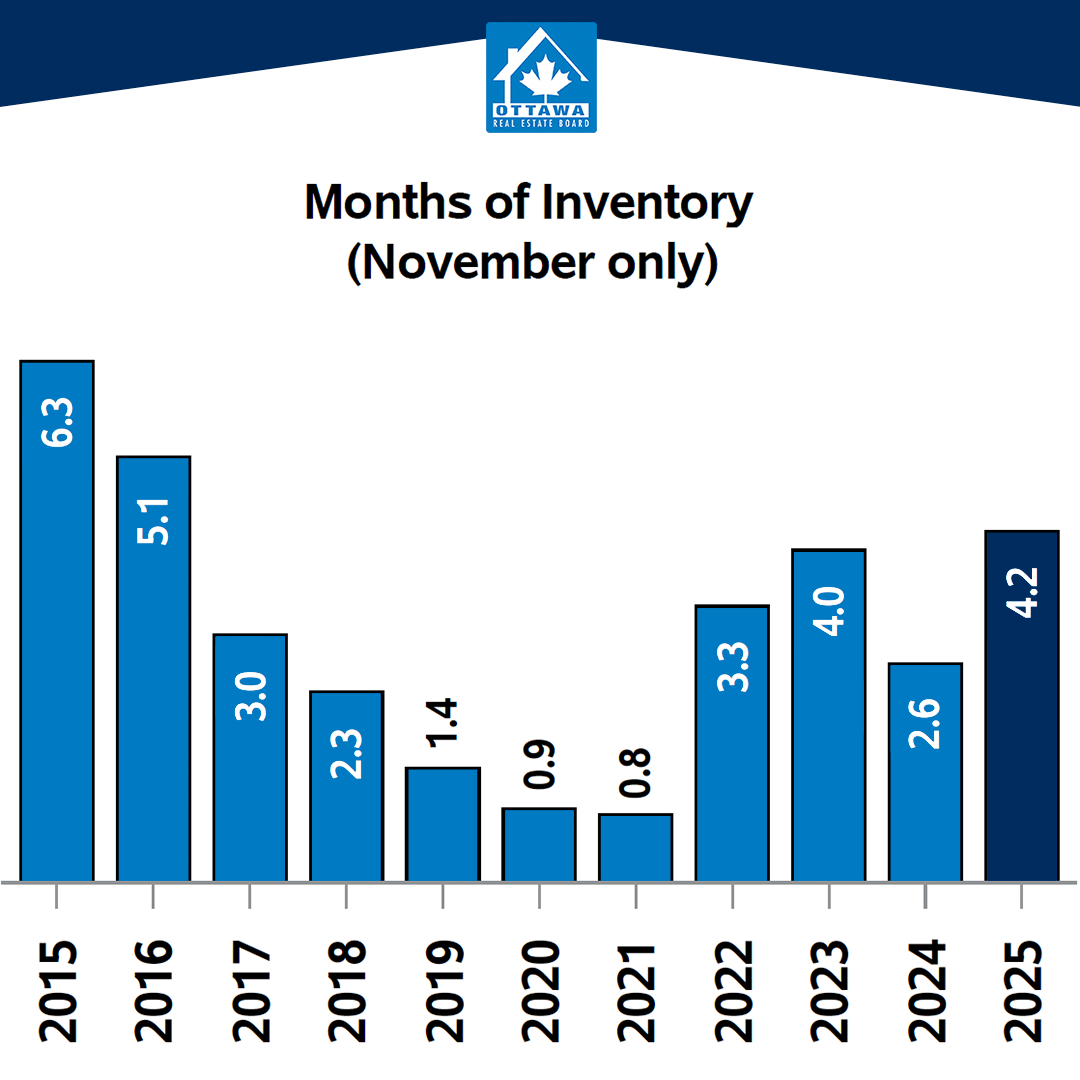
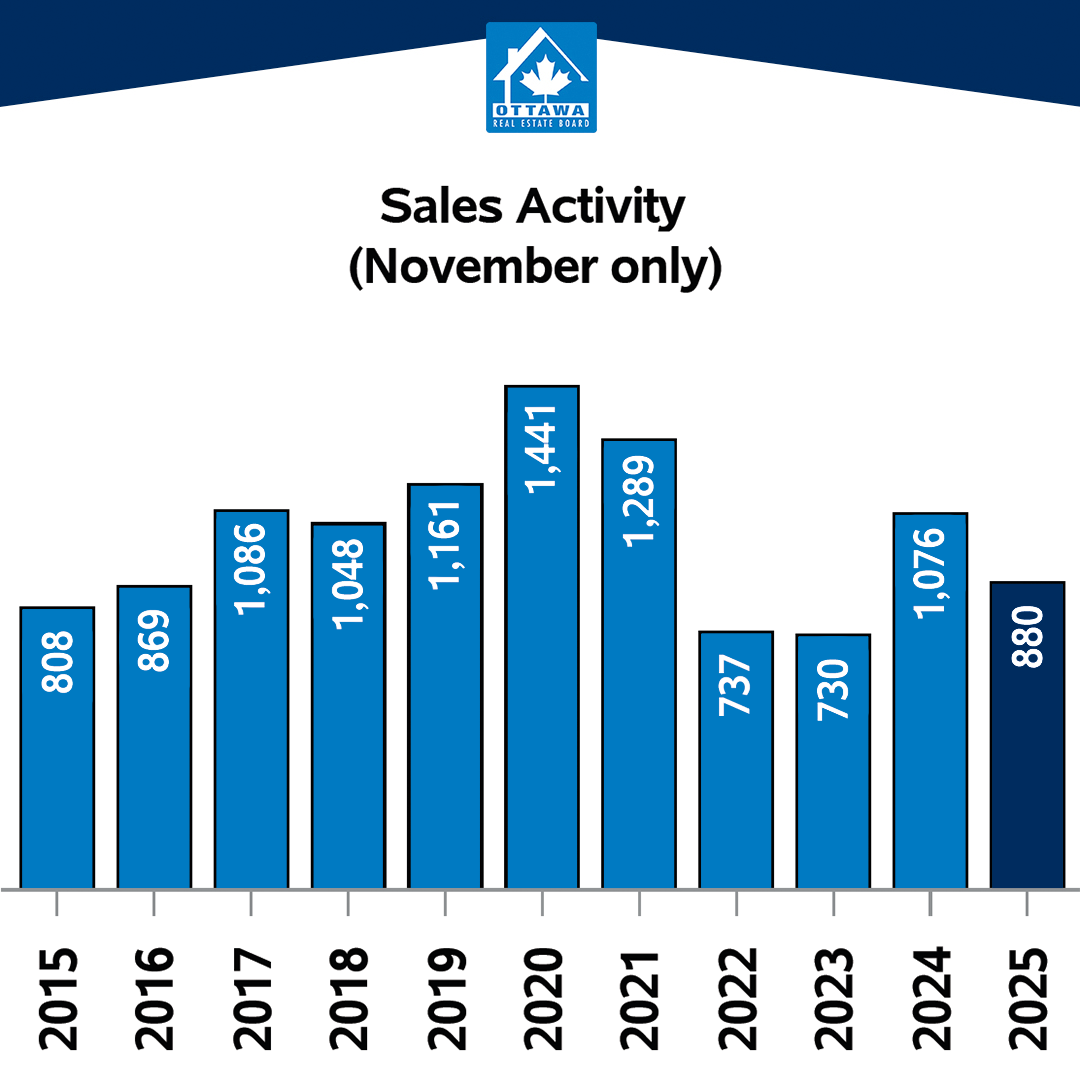
The shift has been slow and steady, but November really highlighted where things are heading. Ottawa is still technically sitting in a balanced market, yet different segments are starting to move in very different directions — and some are shifting quickly.
Condo apartments, for example, have climbed to seven months of inventory, a notable jump that firmly places that segment in buyer’s-market territory. (For context, months of inventory measures how long it would take for all current listings to sell if no new ones came on the market.) Seven months means buyers have leverage and plenty of choice.
By contrast, single-family homes are holding steady at roughly four months of inventory, and townhomes are even tighter at around three months — both still within balanced-market conditions. But as always, Ottawa is really a collection of micro-stories. For example, if you’re buying or selling in Westboro, The Glebe, or downtown under $1M, you’re seeing something completely different from the citywide averages. Inventory in these pockets is incredibly tight, competition is high, and well-priced homes are moving fast. So even though the overall market reads “balanced,” your lived experience may feel far more competitive.
Layered on top of all this is the Bank of Canada’s latest decision to hold interest rates steady. This means we’re heading into the new year with what I’d call a neutral rate environment — rates aren’t pushing the market forward, but they’re not pulling it back either. A rate cut would certainly help unlock more momentum (and yes, selfishly, I’d love to see that), especially as inventory builds in certain segments.
If you’re curious about what’s happening in your specific neighbourhood or want a breakdown of recent sales around your home, feel free to reach out anytime. Every pocket of the city is behaving differently right now, and we’re always happy to walk you through it.
We’ll also be sharing a more detailed 2026 market forecast in the next blog post. There’s a lot to unpack, and I’m looking forward to diving deeper with you!
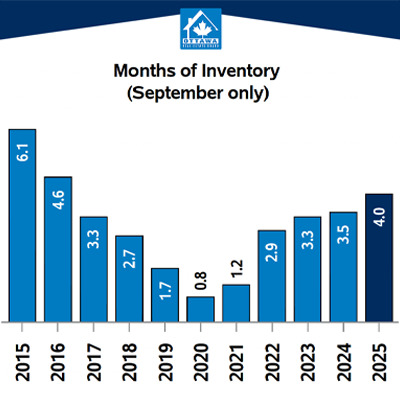
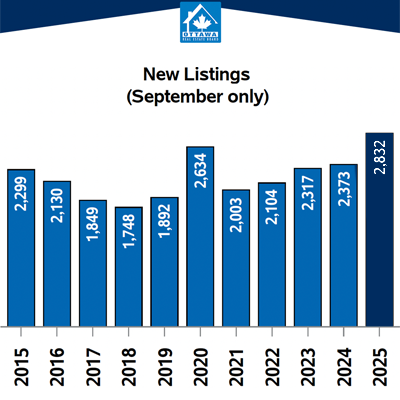
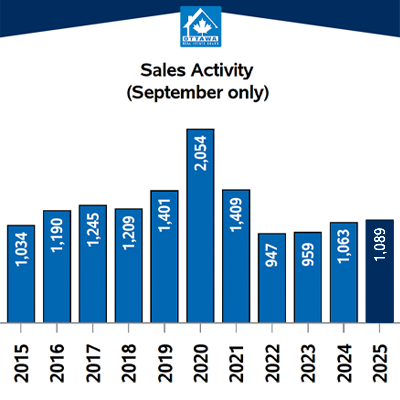
September’s numbers tell an interesting story — we actually saw more sales than last year, which might surprise some people given the headlines. But what really stood out was the jump in new listings, up about 20% year-over-year. That surge has pushed our inventory levels to around four months of supply, the highest we’ve seen in quite some time.
What does that mean? We’re still in balanced market conditions, but if this pace of new listings continues, we could see five or even six months of inventory by winter. As a result, sellers have been making more price adjustments lately. Many are realizing that pricing based on where the market was, not where it is now, can lead to listings sitting longer — and often selling for less once buyers move on.
Much like the stock market, timing matters. It’s tough to let go of yesterday’s high, but success today comes down to smart pricing, strong marketing, and top-notch presentation.
That’s where our team comes in. With shifting conditions, having the right representation is more important than ever. Fun fact: one in two Ottawa transactions involves a Royal LePage agent — a great reminder that experience and strategy matter in this market.
If you’re curious about what’s happening in your neighbourhood or where your home might stand in today’s market, reach out anytime — we’re always happy to help.
Hey everyone, Chris here with a quick update on the Ottawa real estate market! The past few weeks have been eventful, with interest rates dropping, including a significant half-point cut by the Bank of Canada. This shift is already impacting the market—buyers are coming back, multiple offers are returning, and momentum is building.
Here’s what I’m seeing:
Buyer activity is picking up as affordability improves.
Low inventory remains a challenge, with fewer new builds and limited resale options.
Market predictions: A potential shift to a seller’s market in early 2024, with home prices projected to rise by 5-6%.
Every neighborhood is different, so if you’re curious about what’s happening in your area, reach out to my team. Let’s chat about how these changes might impact your real estate goals.
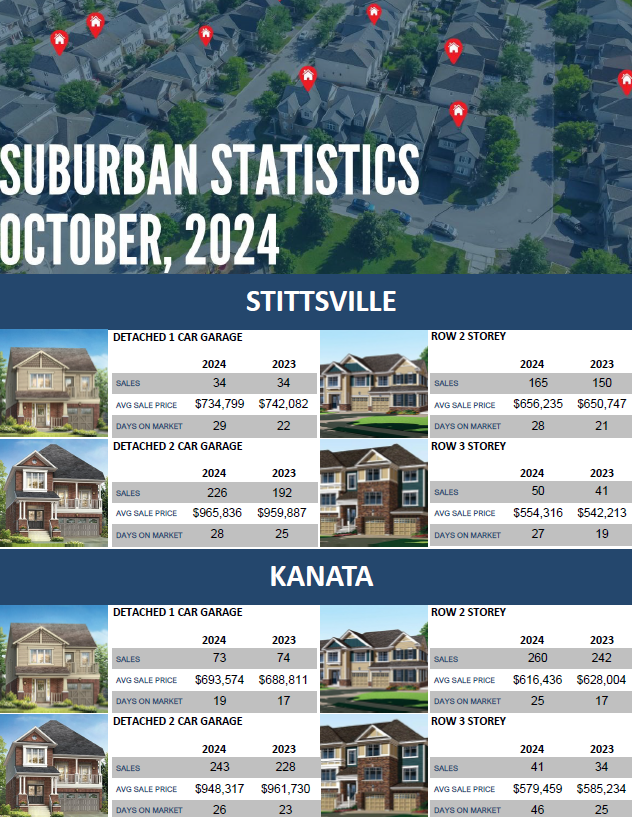
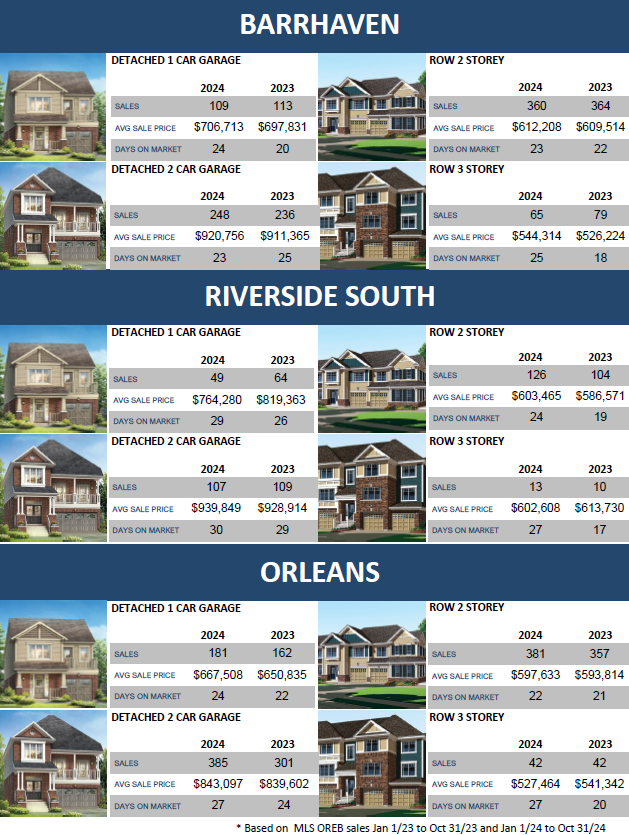
Here’s the latest update in our Suburban Statistics Series, featuring insights on the five largest urban neighborhoods in Ottawa. With Ottawa’s spread-out layout, it’s always fascinating to see how each area’s market trends vary. These stats compare MLS OREB sales from January 1 to October 31, 2023, with the same period in 2024.